
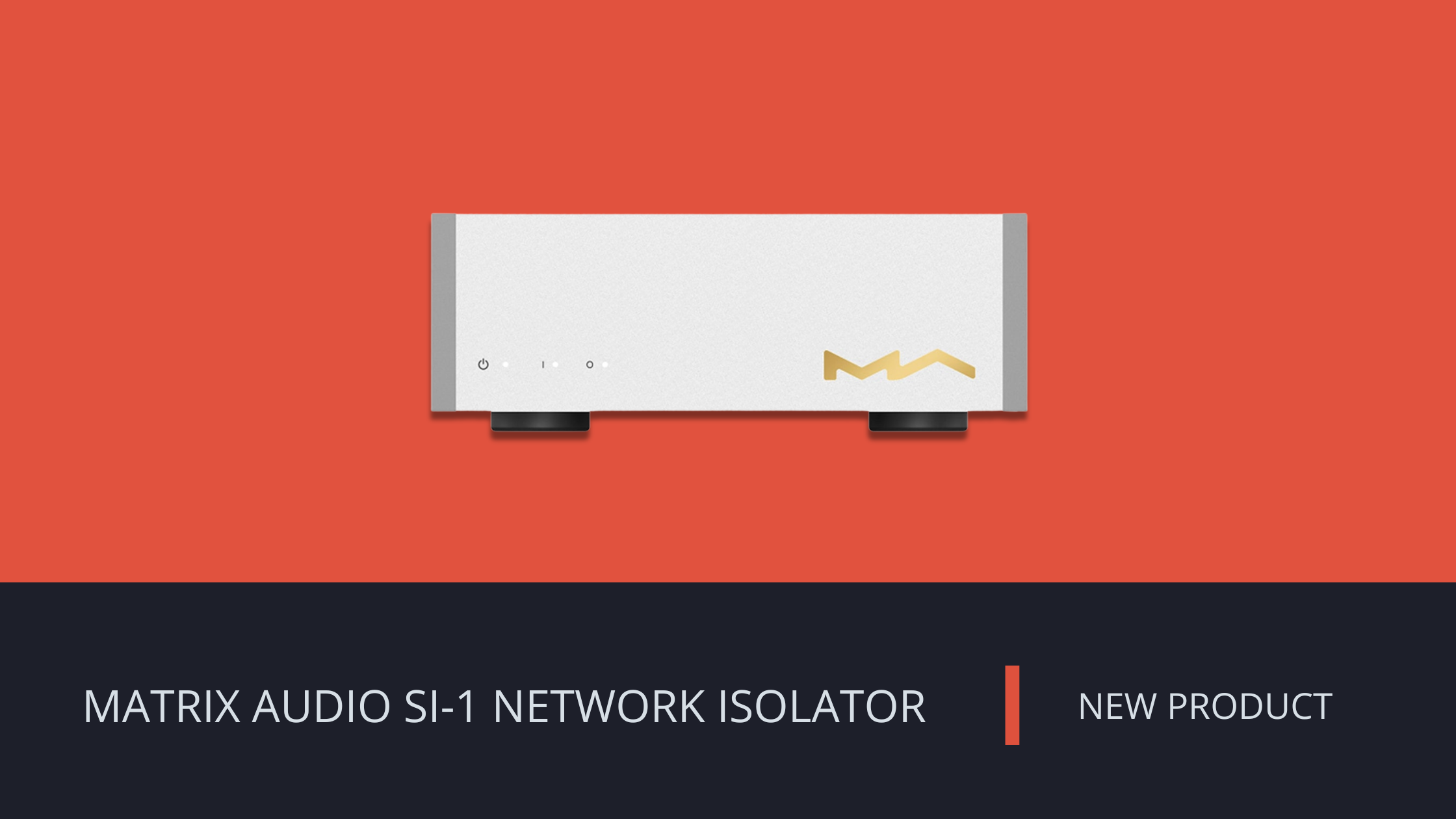
New: Matrix Audio SI-1 network isolator
combines optical isolation with dual femtosecond clocks
The Matrix Audio SI-1 is an active network isolator designed to electrically separate network infrastructure from high-resolution audio components. It combines dual-channel optical-electrical isolation, independent transmit and receive paths, two femtosecond clocks, a linear power supply, and Gigabit Ethernet connectivity in a CNC-machined aluminum chassis. The design is intended for network streamers, music players, DACs, and other audio systems where routers, switches, and interconnected equipment can introduce electrical noise or differences in ground potential.
Active optical-electrical isolation
Rather than maintaining direct electrical continuity between its two Ethernet ports, the SI-1 converts the network connection through an active optical-electrical isolation stage. The architecture separates the connected devices electrically, helping prevent electromagnetic interference generated by routers and switches from traveling directly into downstream audio equipment.
This electrical break also interrupts ground loops caused by differences in grounding potential between components. Matrix Audio uses separate optical channels for sending and receiving network data, keeping the two transmission directions independent to reduce interaction between the signal paths while preserving the bidirectional communication required by Ethernet.
Independent optical transmission and clocking
The SI-1 incorporates two femtosecond clocks within its network architecture. These provide precise local timing for the isolation and transmission circuitry, while the independent optical channels keep transmit and receive functions separated from one another.
Matrix Audio pairs this clocking arrangement with active optical transmission to control timing errors within the isolator itself and maintain consistent network data transfer. The clock system operates as part of the SI-1's internal Ethernet architecture rather than as a replacement for the clocking stages used inside a connected streamer or DAC.
Linear power supply
Power is supplied by a dual-winding potted toroidal transformer followed by multiple low-dropout voltage regulators. The separate transformer windings and regulated supply stages provide stable operating voltages for the SI-1's isolation, optical transmission, and network circuitry while limiting power-supply noise within the unit.
Using a linear supply also keeps the isolator independent from the switching supplies commonly found in routers and other network hardware. The power architecture therefore supports the same electrical-separation objective as the optical network stage rather than introducing another direct path between the network side and connected audio components.
Gigabit Ethernet connectivity
The rear panel provides two RJ45 Ethernet ports supporting 10Mbps, 100Mbps, and 1Gbps network connections. One port accepts the incoming network connection, while the second provides the photoelectrically isolated output for the downstream audio component.
The two ports are physically separated within the chassis, and Matrix Audio adds an electrical isolation washer to the isolated output connection to reinforce separation between the two sides. A 2K MAC address table supports the SI-1's internal network handling while maintaining compatibility with standard Ethernet infrastructure.
Electrical separation and protection
Because the network connection does not maintain direct electrical continuity through the SI-1, disturbances present on one side of the network have an additional isolation barrier before reaching equipment on the other. Matrix Audio specifies the architecture as providing protection against electrical disturbances including surges, electrostatic discharge, and noise carried through interconnected devices.
The isolation stage is primarily intended to control unwanted electrical coupling between network hardware and audio components. It does not alter the audio data itself—the Ethernet connection continues to transport standard network packets while the electrical relationship between the connected devices is interrupted.
CNC aluminum enclosure and status controls
The SI-1 is housed in a CNC-machined unibody aluminum enclosure. In addition to providing mechanical rigidity, the conductive chassis helps shield the internal circuitry from external electromagnetic interference.
Front-panel LEDs indicate power and network-link status, while additional indicators at the rear Ethernet ports show link speed and activity. The rear Ethernet LEDs can also be switched off, which allows the SI-1 to operate without unnecessary port lighting in dark listening rooms or installations where visible indicators are undesirable.
Availability
The Matrix Audio SI-1 network isolator is available on Apos Audio.