
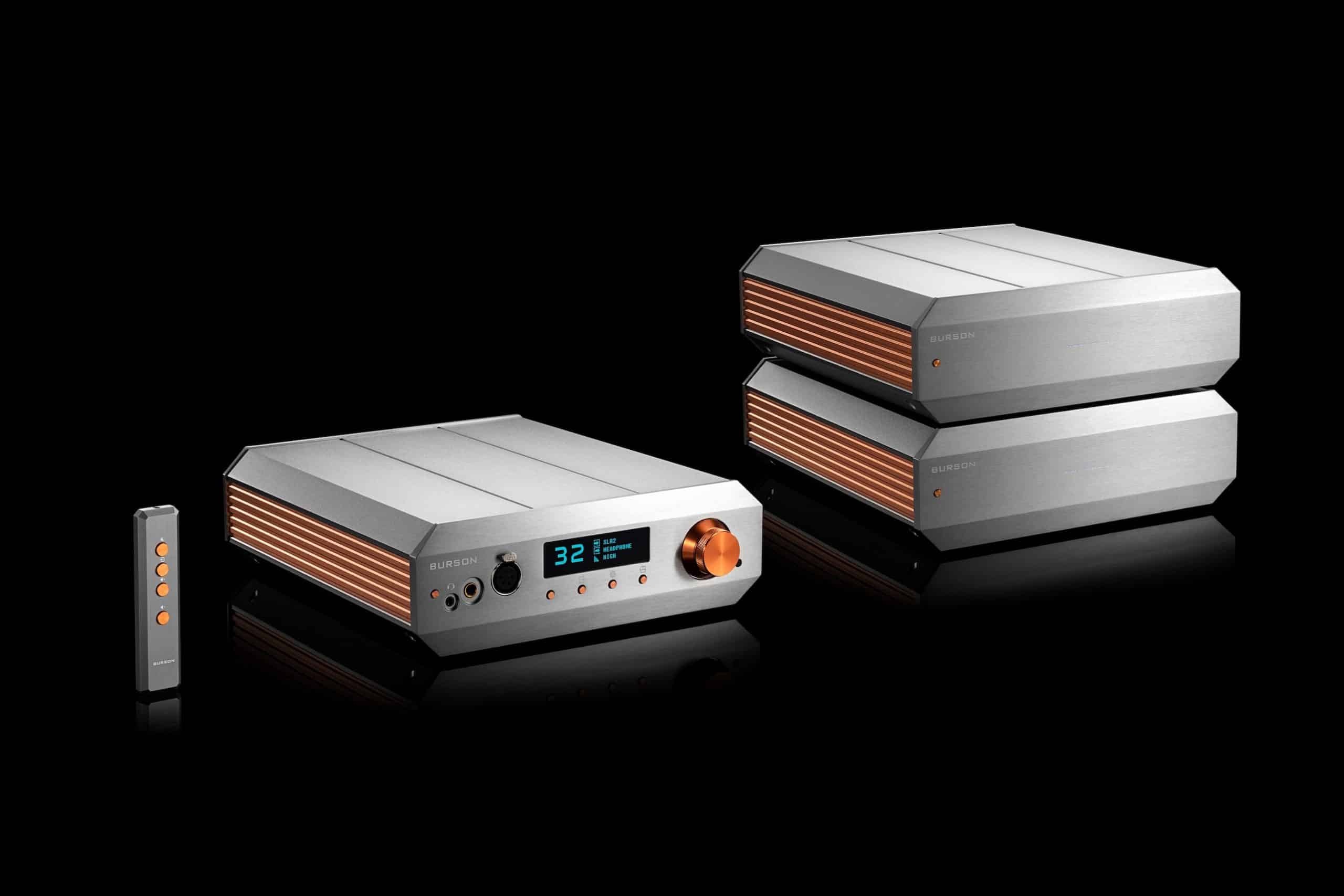
Burson Soloist Voyager Flagship Class-A Headphone Amplifier
Note: There is a one week lead time between ordering and fulfillment for this model.
Flagship Class-A Headphone Amplifier and Preamp
The Soloist Voyager is Burson’s flagship desktop headphone amplifier and preamplifier — a pure Class-A, dual mono design that delivers up to 10 W per channel through XLR, drives difficult headphones without strain, and anchors a serious two-channel or headphone-focused system with control, clarity, and weight.
Pure class-a power for demanding headphones
The Soloist Voyager runs in pure Class-A — the output devices are biased so current is always flowing, which keeps distortion low and dynamics intact even during demanding musical swings. With up to 10 W into 16 ohm on the balanced XLR output and 5 W on the single-ended output, it handles insensitive planar magnetics and high-impedance dynamics without running out of steam. The result is punch, grip, and ease at everyday listening levels, not just at the extremes.
Dual mono architecture for deep separation
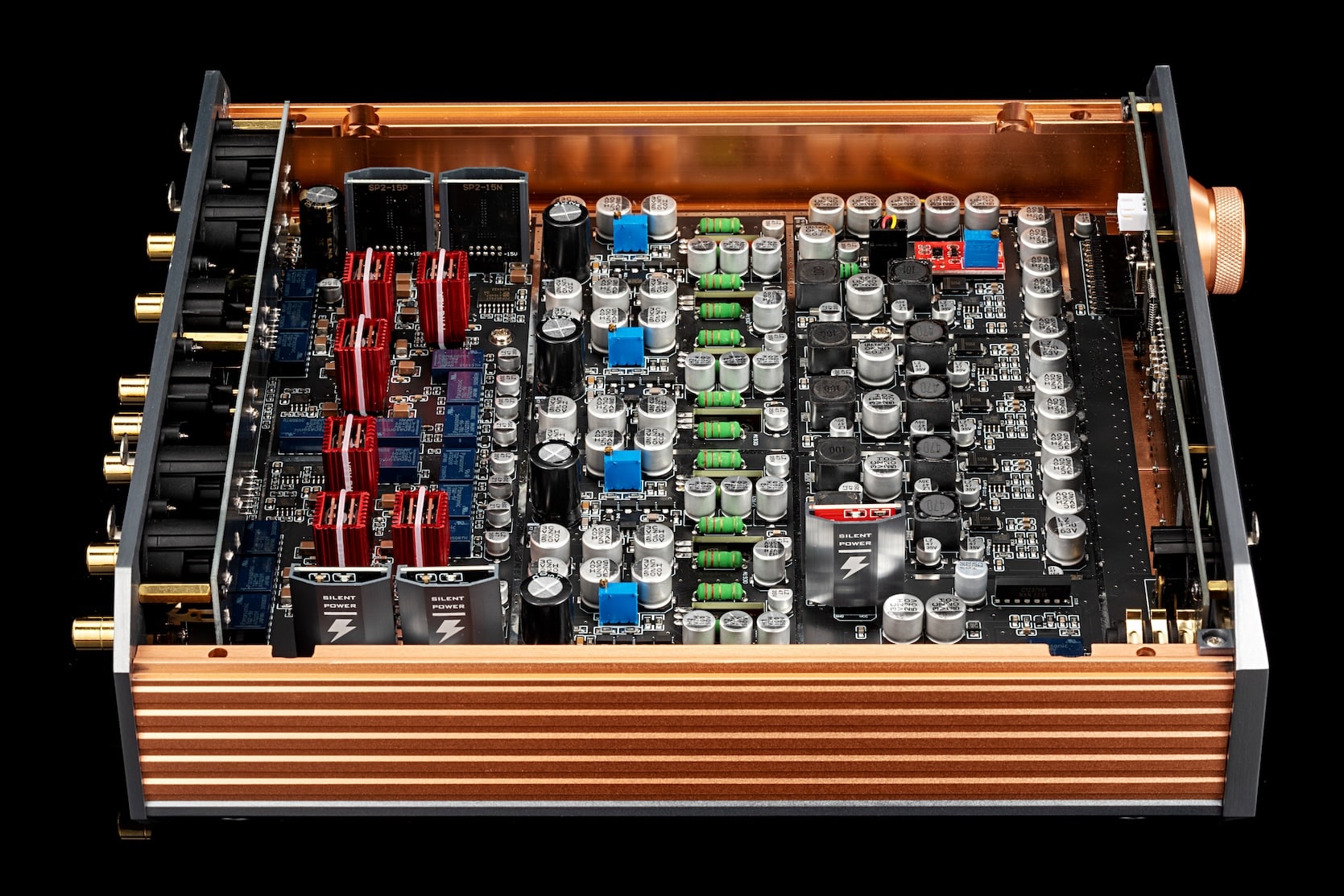
Inside the Voyager are two completely independent amplifiers, each with its own power supply and signal path. This dual mono architecture minimizes crosstalk between channels and preserves stereo imaging — especially noticeable on spacious recordings and complex mixes. Instruments occupy their own positions with convincing width and depth, helping you track subtle panning moves, room reflections, and layered arrangements.
V7 vivid discrete opamps with 20 years of tuning
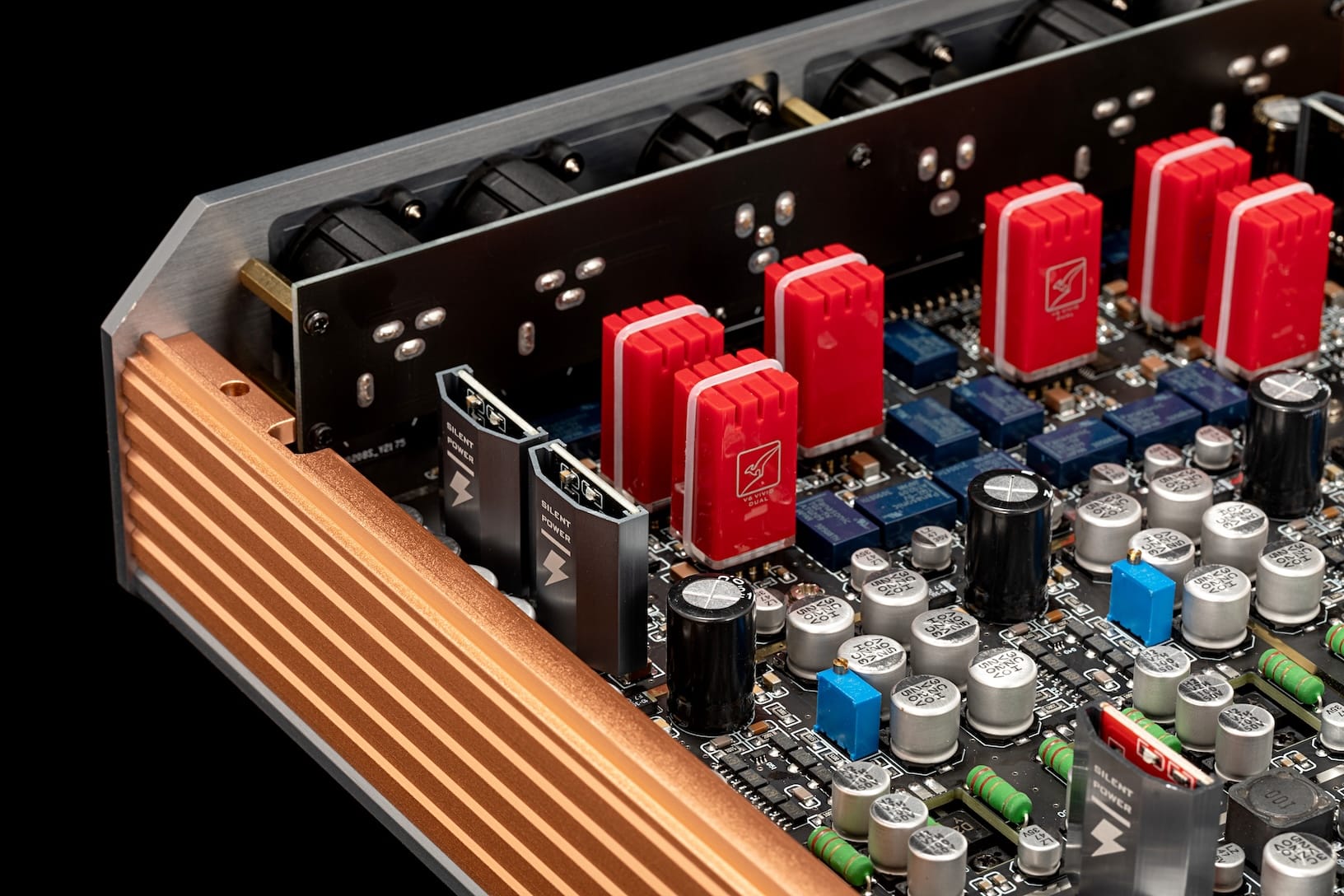
Six V7 Vivid discrete opamps sit at the heart of the Soloist Voyager — the latest evolution of Burson’s long-running discrete opamp platform. These opamps trade generic integrated circuits for carefully voiced, full-sized discrete stages, tuned over two decades for dynamic contrast, texture, and clarity. You hear it as fast transients, clean leading edges, and a natural decay that keeps tone intact without smearing.
Silent power regulators for black backgrounds
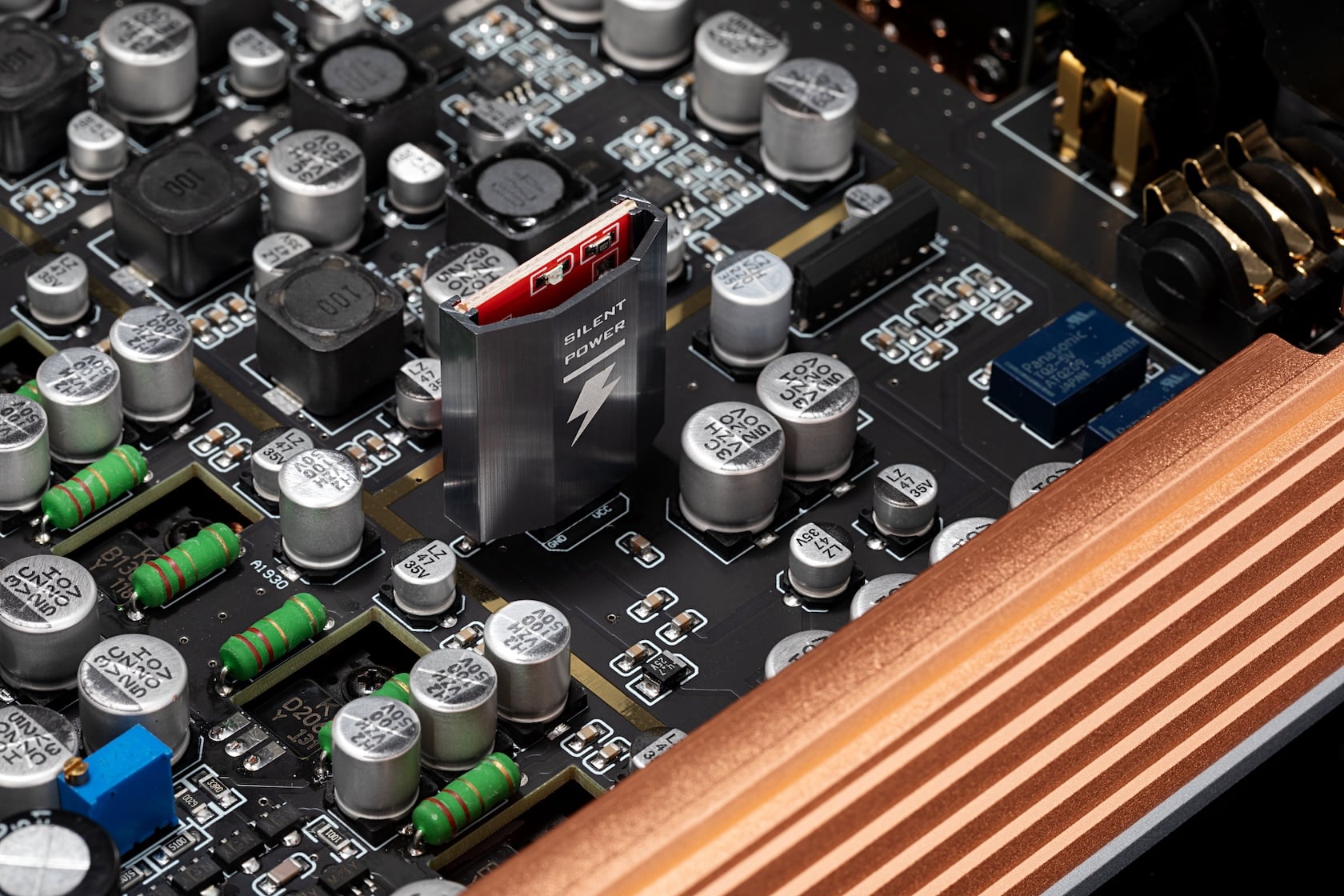
The second-generation Silent Power Regulators (SP2) in the Voyager deliver DC that is more than 200 times quieter than standard regulators. Cleaner power means less low-level noise modulating the audio signal, so reverb tails, ambient cues, and microdynamics are easier to follow. Paired with a THD of under 0.0015% and signal-to-noise ratios up to 116 dB, the Voyager keeps the noise floor well below the threshold of your music.
Cool case, high idle current
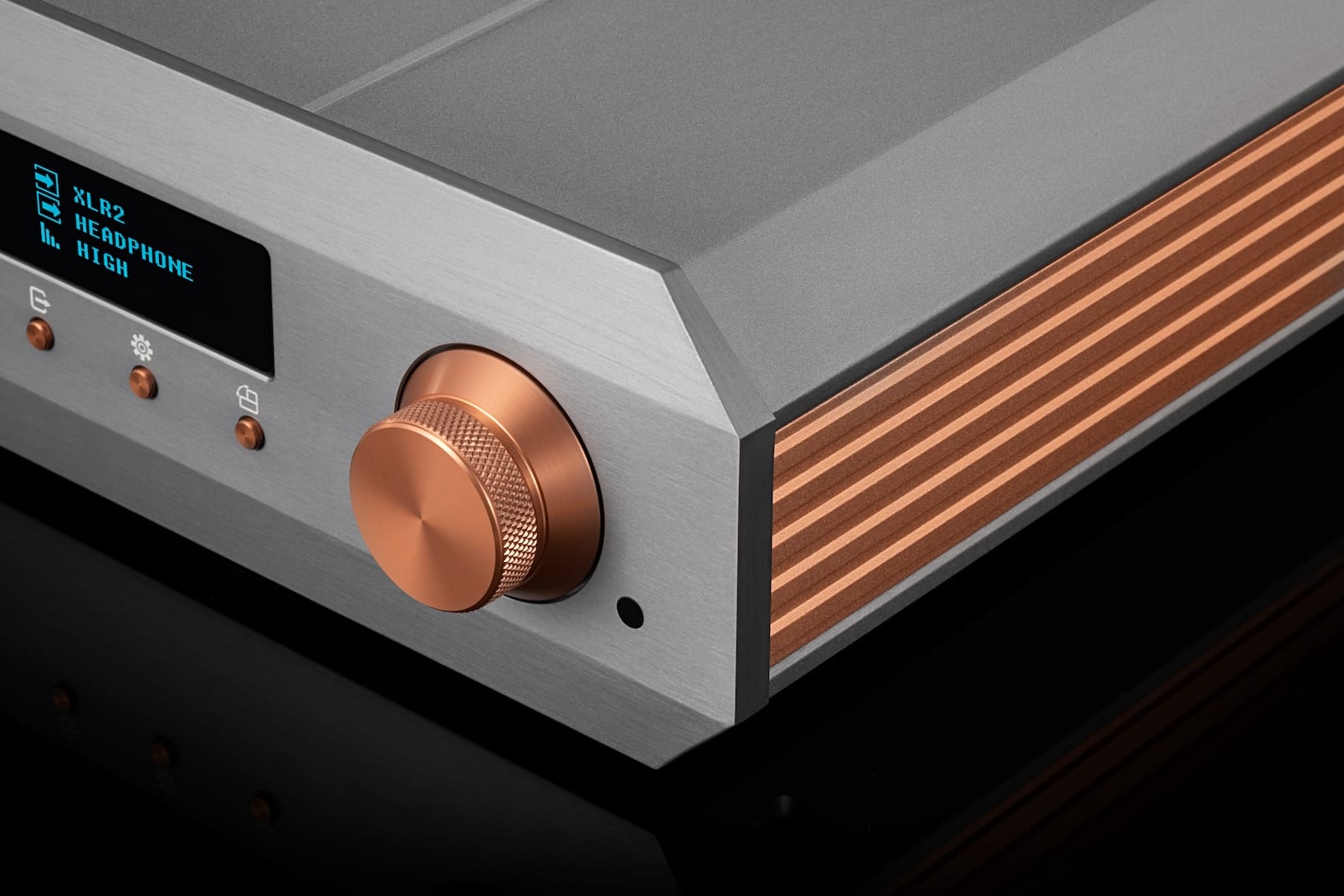
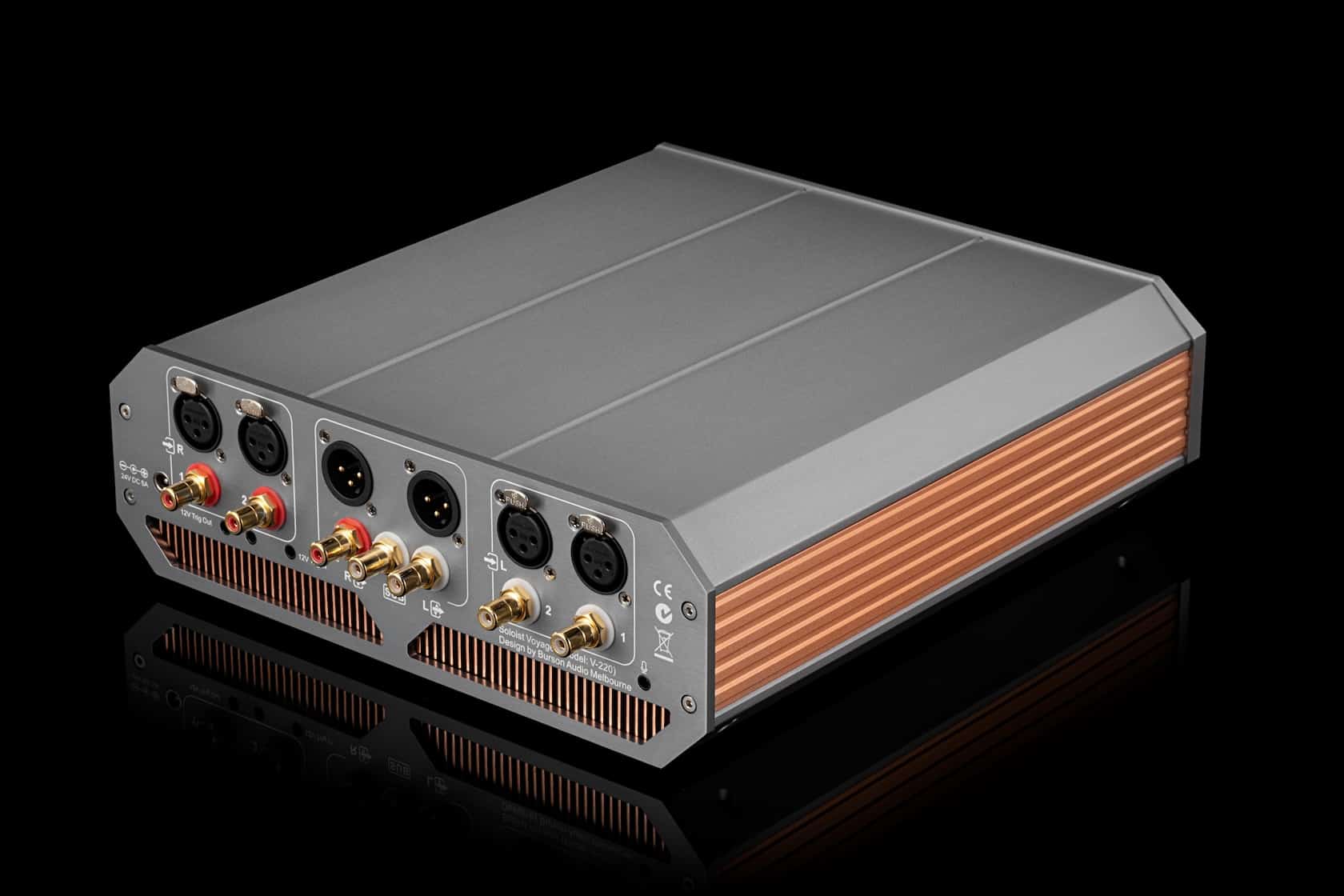
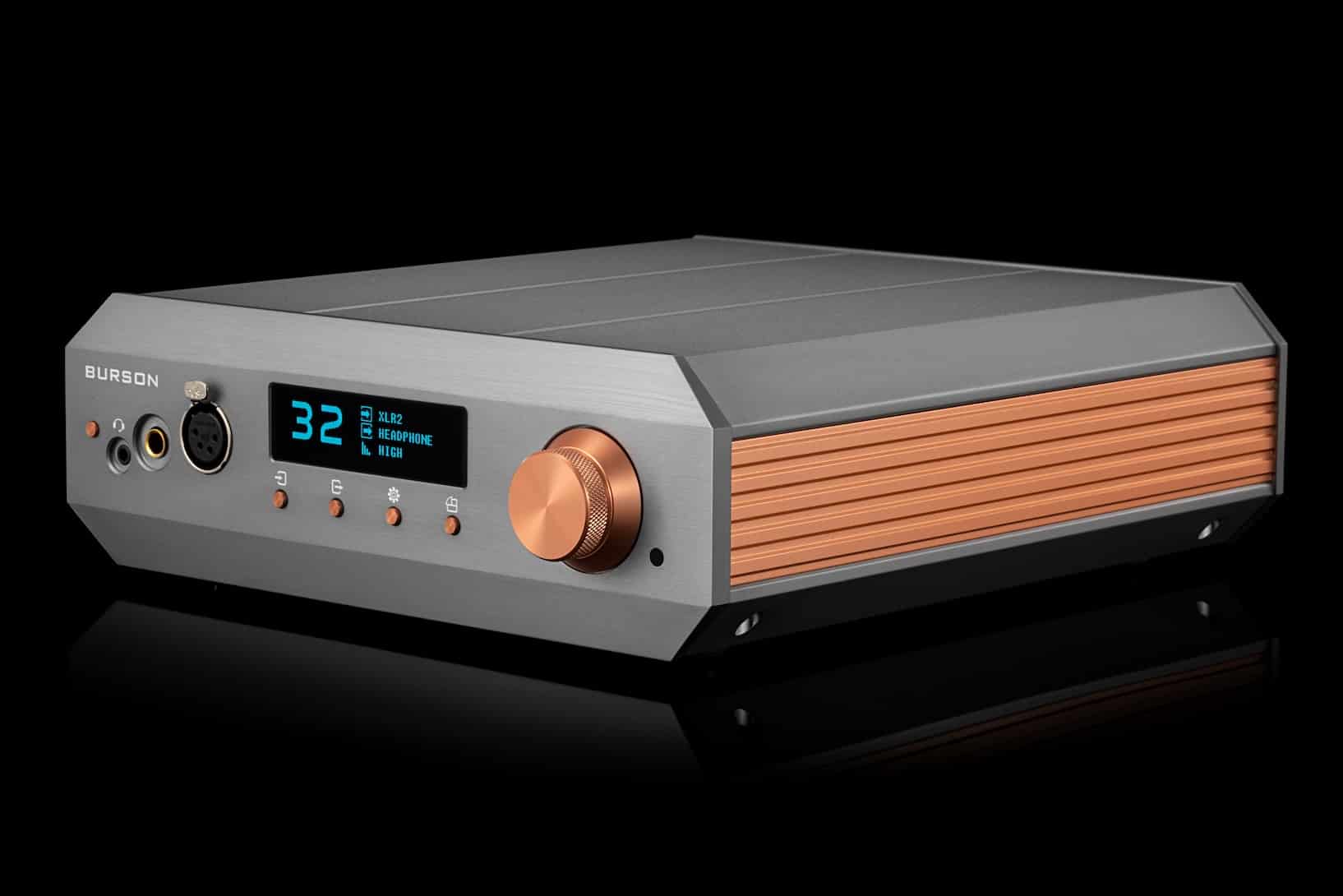
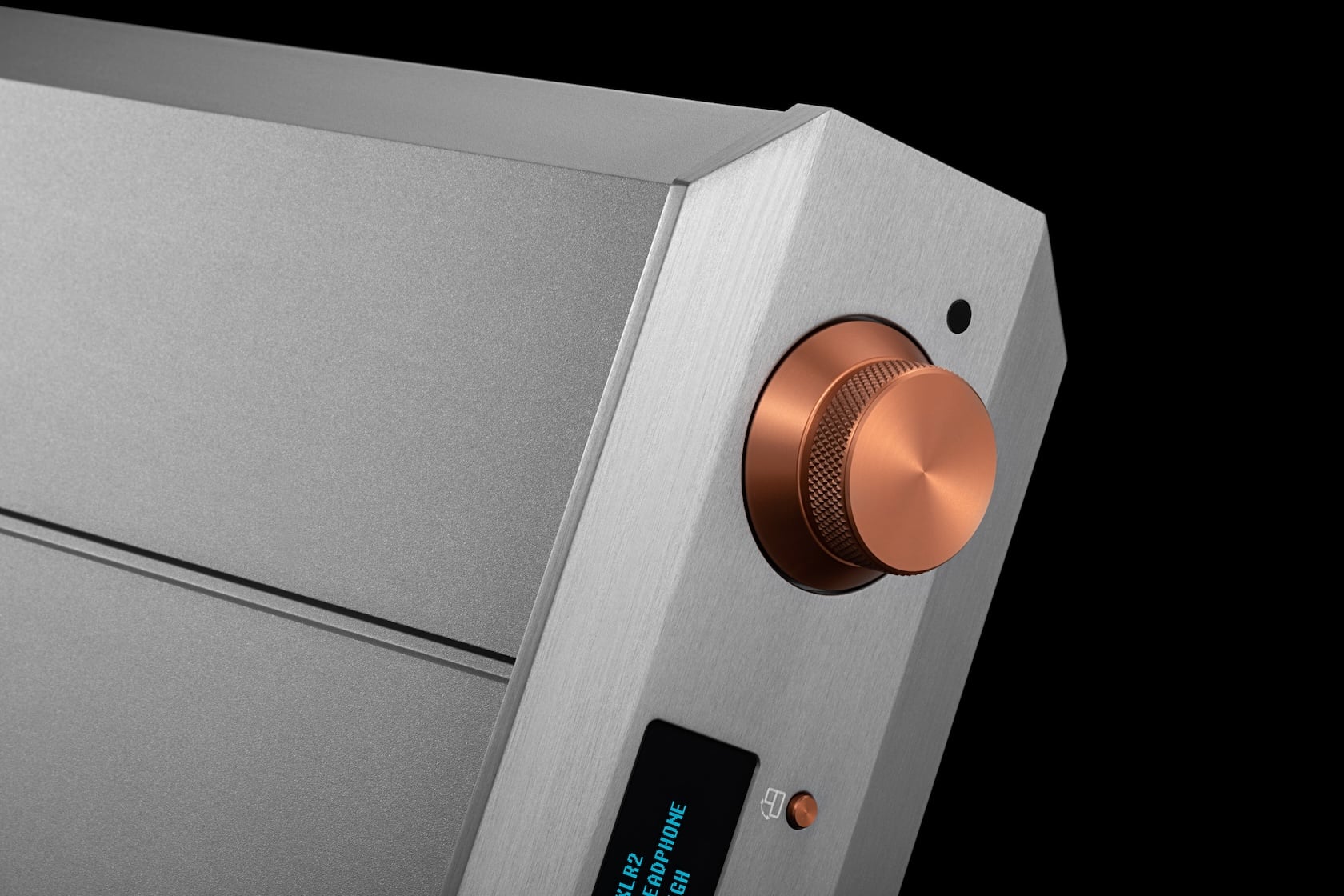
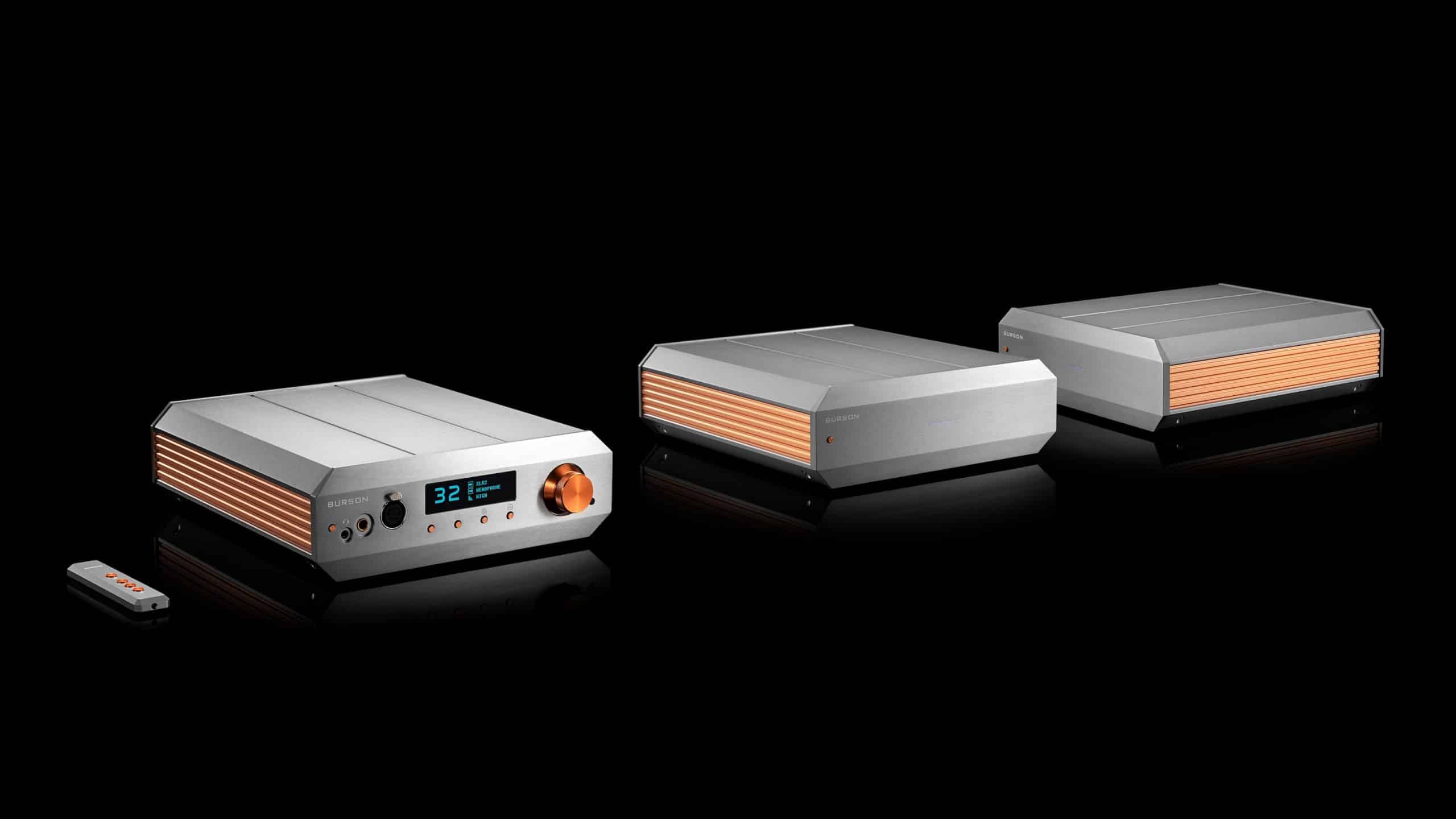
Pure Class-A operation generates heat — the Soloist Voyager’s second-generation Cool Case is built to handle it. The chassis dissipates warmth from roughly 80 W of idle current without resorting to active cooling, so there is no fan noise, just silent operation on your desk or rack. Finished in copper gold and space grey, it visually pairs with other modern components while still feeling understated and purposeful.
Twin muses72320 for precise volume control
Volume is handled by dual MUSES72320 chips — one per channel — with discrete buffers. This configuration delivers precise channel matching even at low levels, wide dynamic range around -112 dB, and a smooth, predictable volume curve. Whether you are nudging the level for late-night listening or opening it up for dynamic orchestral work, stereo balance and resolution are maintained.
Custom listening modes for headphones and speakers
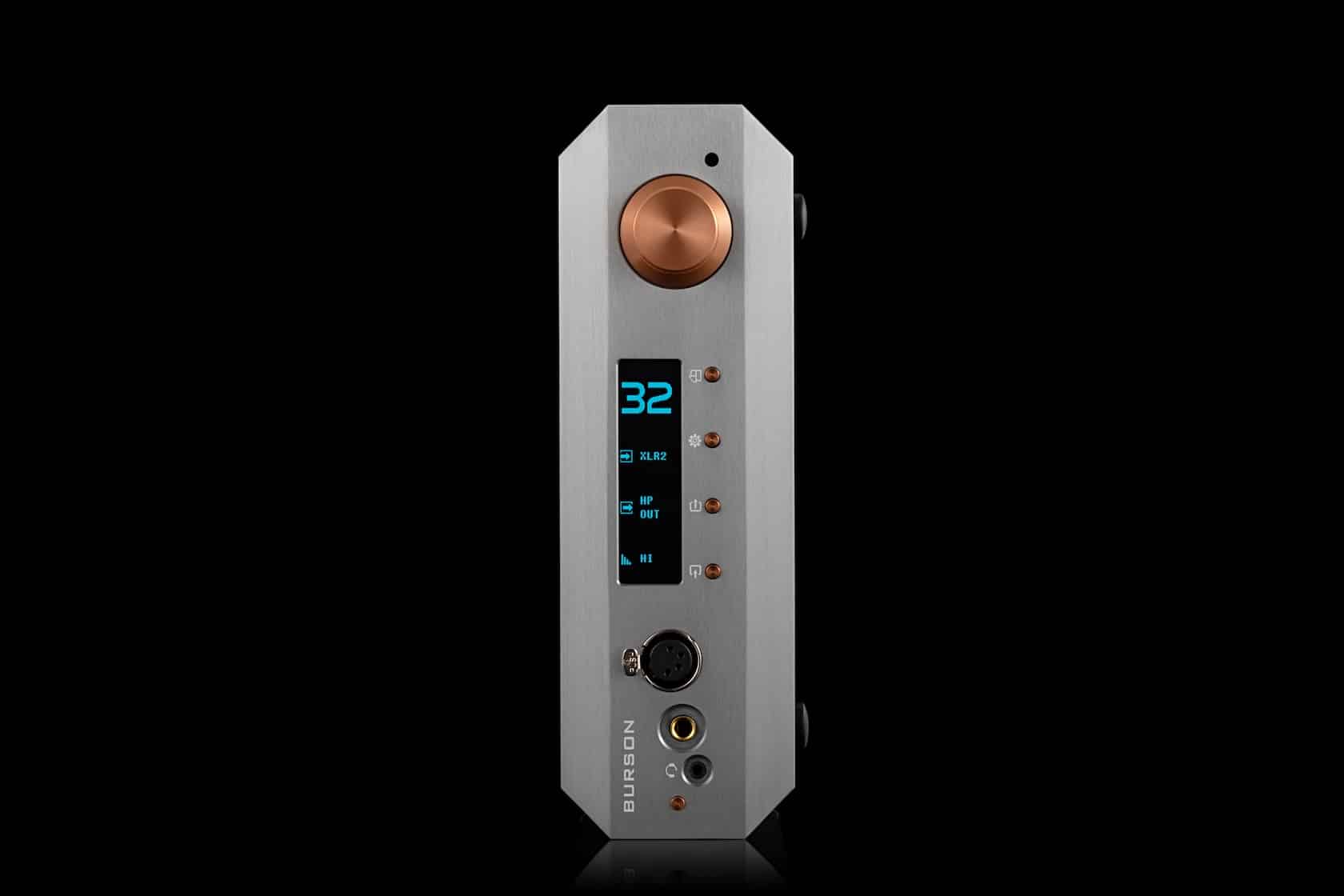
The Soloist Voyager adapts to both headphone and speaker use through a set of hardware listening modes. Crossfeed gently blends channels for headphone listening, simulating some of the acoustic interaction of speakers and reducing hard-panned fatigue. Stereo balance trim helps you dial in precise imaging with speakers. A dedicated headphone plus subwoofer mode lets you route low frequencies to a sub while feeding full-range signal to your headphones — ideal for games and movies when you want both tactile impact and detailed nearfield listening.
Fusion core upgrade for advanced DC power
Paired with the optional Fusion Core GaN-based power supply, the Soloist Voyager can be pushed even further. The Fusion Core delivers up to 360 W of ultra-low-noise, high-current DC power using gallium nitride switching devices that run cooler and switch faster than traditional silicon. More stable, higher-current DC translates into greater dynamic headroom and better control over driver motion, especially at higher playback levels. It is an upgrade path built for long-term ownership.
Versatile I/O for modern systems
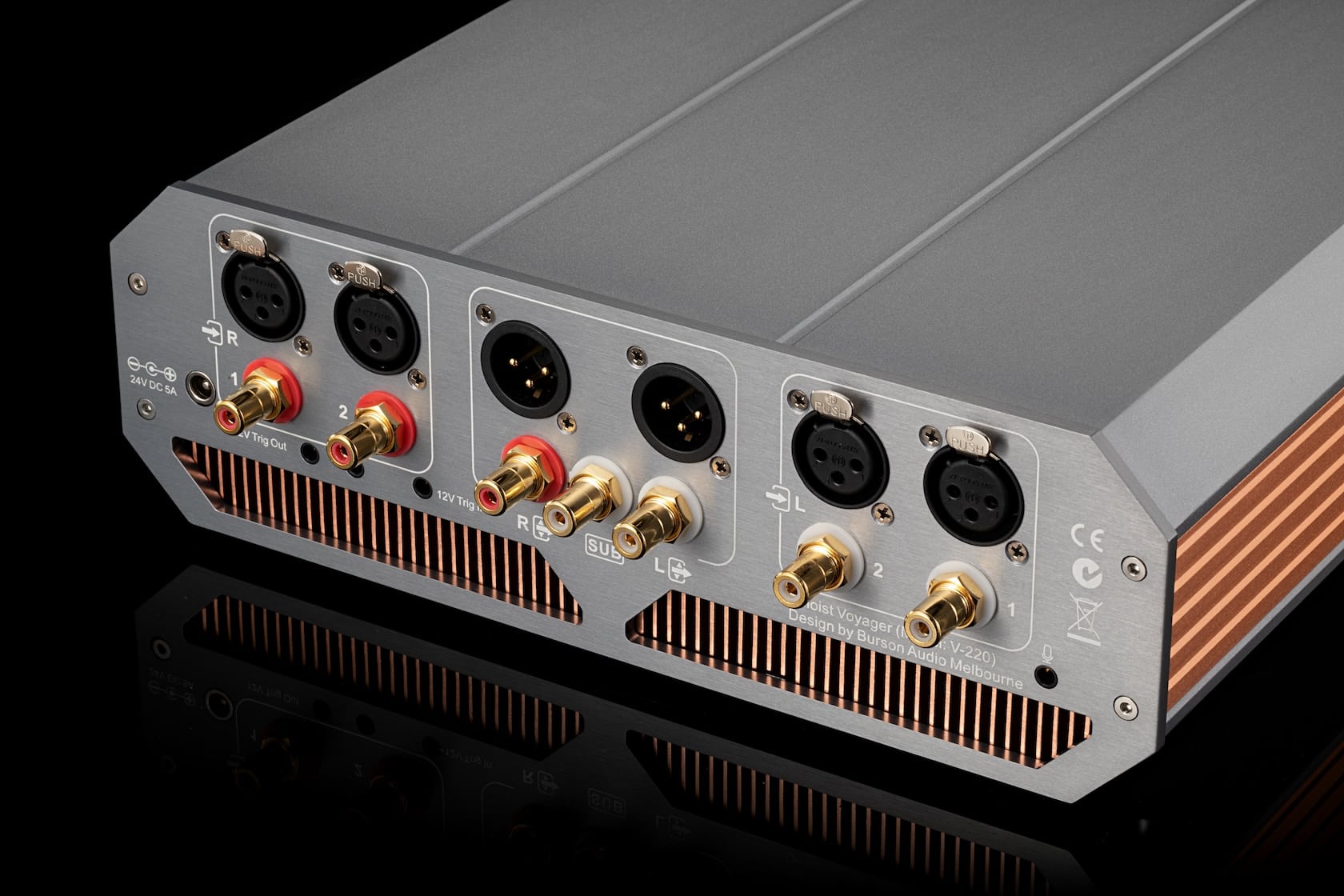
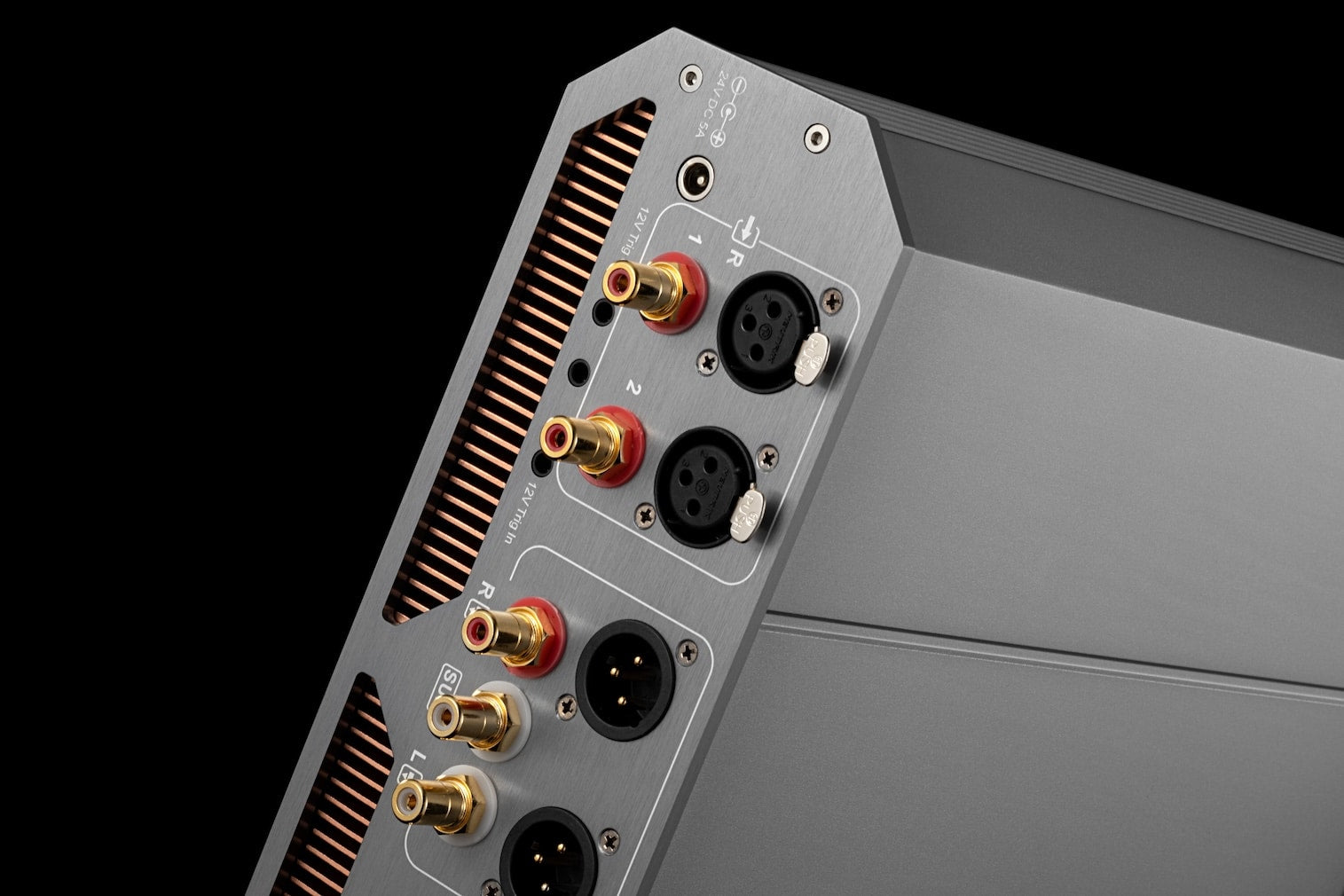
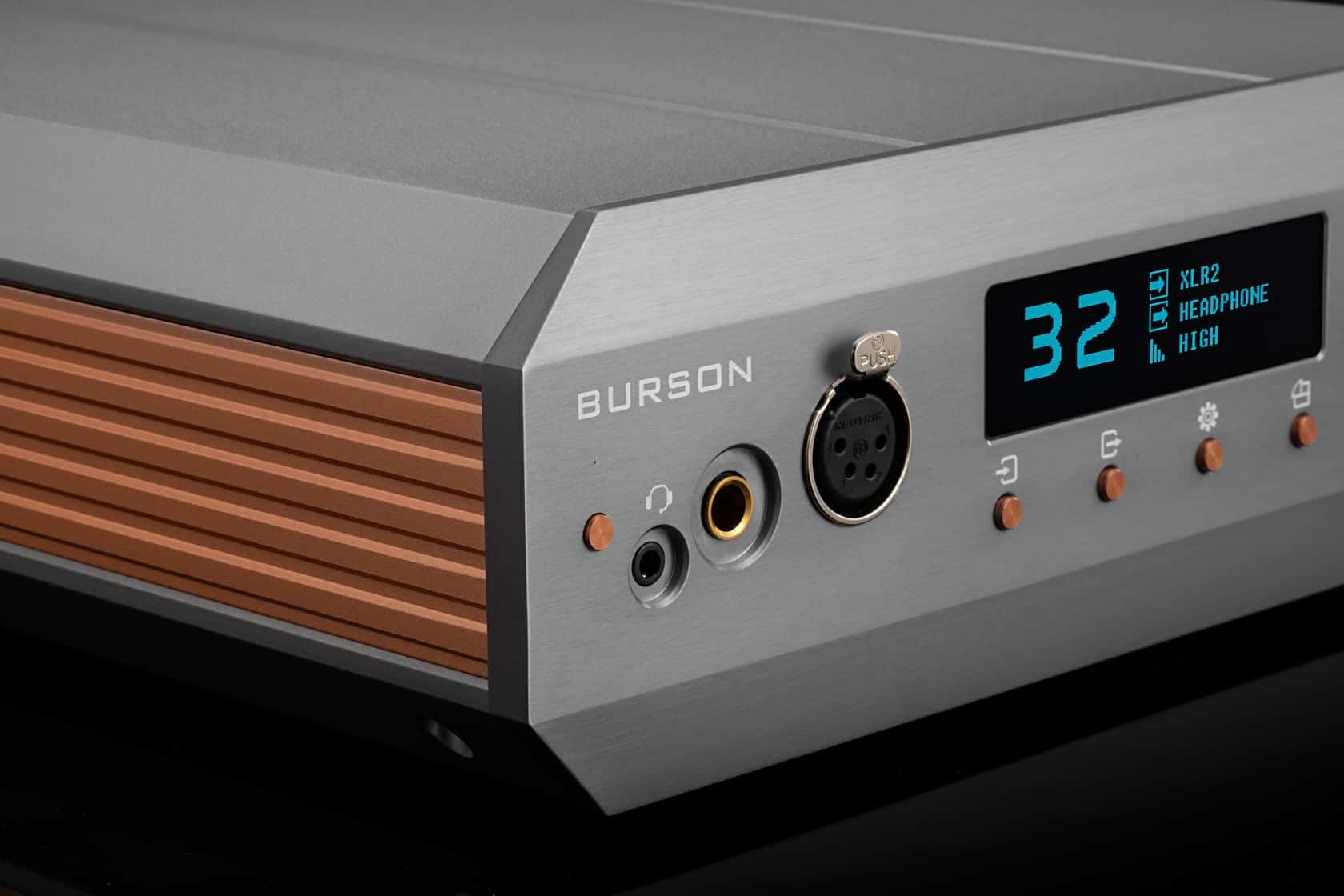
Multiple balanced and single-ended connections make the Voyager a flexible hub. On the input side, you get two XLR line inputs, two RCA inputs, and a mic bypass input for integrating with recording or streaming chains. Outputs include balanced XLR preamp outputs, RCA preamp outputs, an RCA subwoofer output, a balanced XLR headphone jack, and a 6.35 mm single-ended headphone output. Whether you are driving powered monitors, a power amplifier, a subwoofer, or several headphones, the Voyager keeps routing straightforward and repeatable.
Worldwide AC support and desktop-ready footprint
The Soloist Voyager accepts worldwide 100–240 V AC — ready for different regions and voltage standards, whether at home or in a studio environment. It weighs about 15.5 lb (approx. 7 kg) and measures 10.2 x 10.6 x 3.3 in (265 x 270 x 85 mm), making it substantial enough to stay put on a desk or rack while still fitting into real-world spaces. It feels solid, but it is easy to place within arm’s reach for daily volume and gain adjustments.
High current design for real-world loads
Headphone impedance and sensitivity change with frequency — music is never a static sine wave. The Soloist Voyager’s design focuses on high output current to maintain linear behavior across these changes. Into 16 ohm, it delivers 10 W balanced and 5 W single-ended. Into 32 ohm, up to 8 W and 4 W. Even at 300 ohm, it supplies 0.64 W balanced and 0.32 W single-ended. Across those loads, the signal-to-noise ratio stays high — up to 116 dB — and channel separation up to 99.5%, so both difficult and easy headphones benefit from the same stable, controlled drive.
Burson ecosystem and long-term tuning
As part of the broader Burson ecosystem, the Soloist Voyager works seamlessly with Burson’s discrete opamps and power upgrades from Burson Audio. Rolling different discrete opamps within the supported range lets advanced users fine-tune tonality and presentation without changing the core strengths of the platform. For many listeners, the stock V7 Vivid opamps and optional Fusion Core supply provide a complete, reference-class chain that can anchor a system for years.
Product highlights
- Flagship pure Class-A headphone amplifier and preamp with dual mono architecture
- Up to 10 W into 16 ohm (balanced XLR) and 5 W into 16 ohm (single-ended)
- Six V7 Vivid discrete opamps tuned over 20 years of Burson development
- Second-generation Silent Power Regulators (SP2) with extremely low noise
- Twin MUSES72320 volume control chips with discrete buffers for accurate channel balance
- Hardware crossfeed, stereo balance trim, and headphone plus subwoofer listening modes
- Dedicated subwoofer output for hybrid headphone plus sub systems
- Balanced XLR and single-ended RCA inputs and outputs for flexible integration
- Signal-to-noise ratio up to 116 dB and THD below 0.0015%
- Optional Fusion Core GaN-based 360 W power supply for advanced DC performance
Specs
- AC input: 100–240 V worldwide
- Input impedance: 38 kOhm
- Frequency response: ±1 dB, 0–48 kHz
- THD: less than 0.0015%
- Output impedance (headphone amp): 0.5 ohm
- Output impedance (pre out): 25 ohm
- Signal-to-noise ratio: up to 116 dB (load dependent)
- Channel separation: up to 99.5% (load dependent)
- Headphone power, 16 ohm: 10 W / 5 W (XLR / single-ended)
- Headphone power, 32 ohm: 8 W / 4 W (XLR / single-ended)
- Headphone power, 100 ohm: 3.8 W / 1.9 W (XLR / single-ended)
- Headphone power, 150 ohm: 1.3 W / 0.65 W (XLR / single-ended)
- Headphone power, 300 ohm: 0.64 W / 0.32 W (XLR / single-ended)
- Inputs: 2 x XLR, 2 x RCA, 1 x mic bypass
- Outputs: 1 x XLR preamp, 1 x RCA preamp, 1 x RCA subwoofer, 1 x XLR headphone, 1 x 6.35 mm headphone
- Dimensions: 10.2 x 10.6 x 3.3 in (265 x 270 x 85 mm)
- Weight: approx. 15.5 lb (approx. 7 kg)
- All Burson Op-Amps come with Lifetime Warranty provided by Burson
What’s included
- Soloist Voyager (V-220) main unit
- Remote control
- Standard or Deluxe external PSU — 24 V / 5 A PSU or Super Charger 5 A (bundle dependent)
- Standard or Deluxe opamp configuration — V6 Vivid or V7 Vivid Pro Audio discrete opamps (bundle dependent)
- With SP02 power modules installed on supported versions
- Regional AC power cable
Choose options