
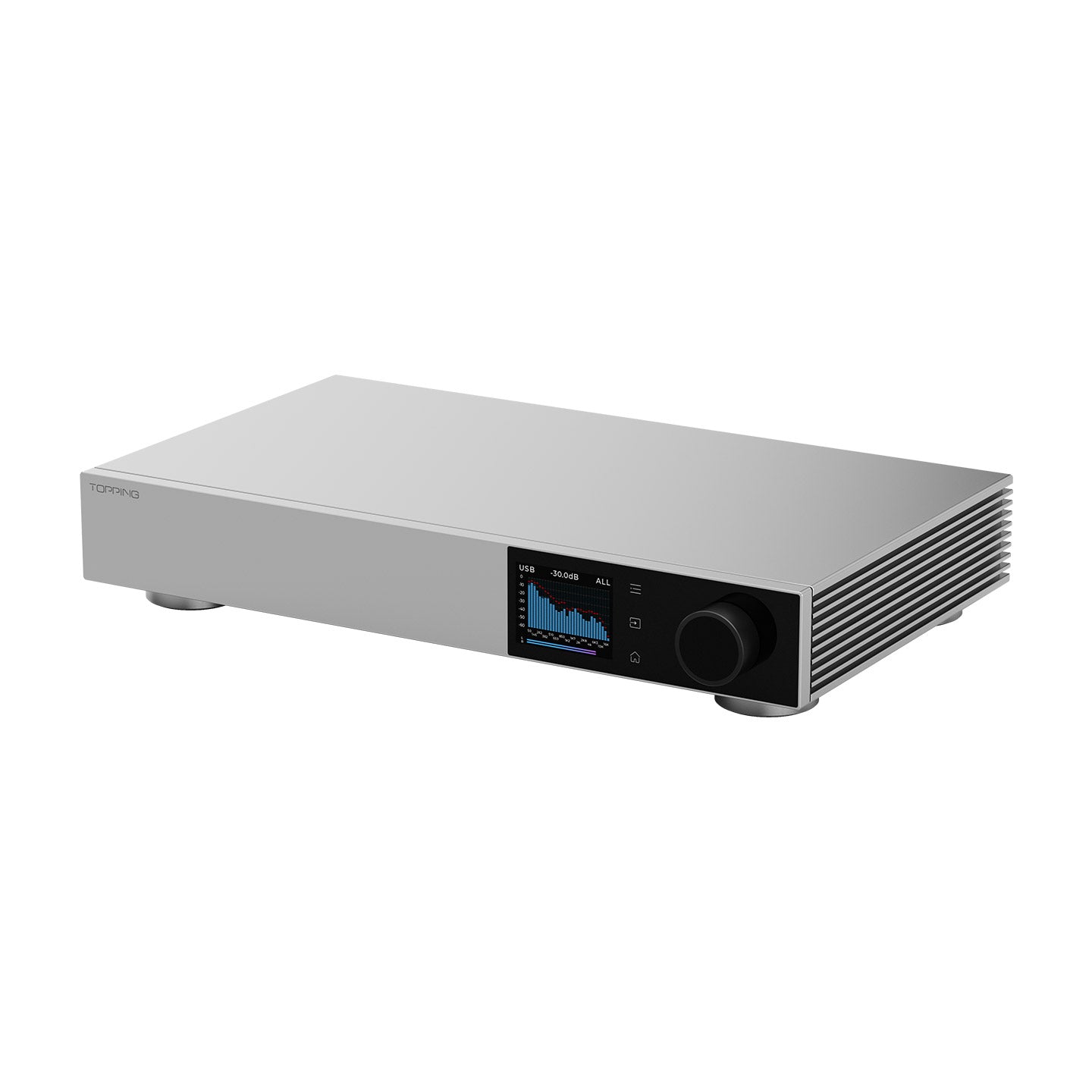
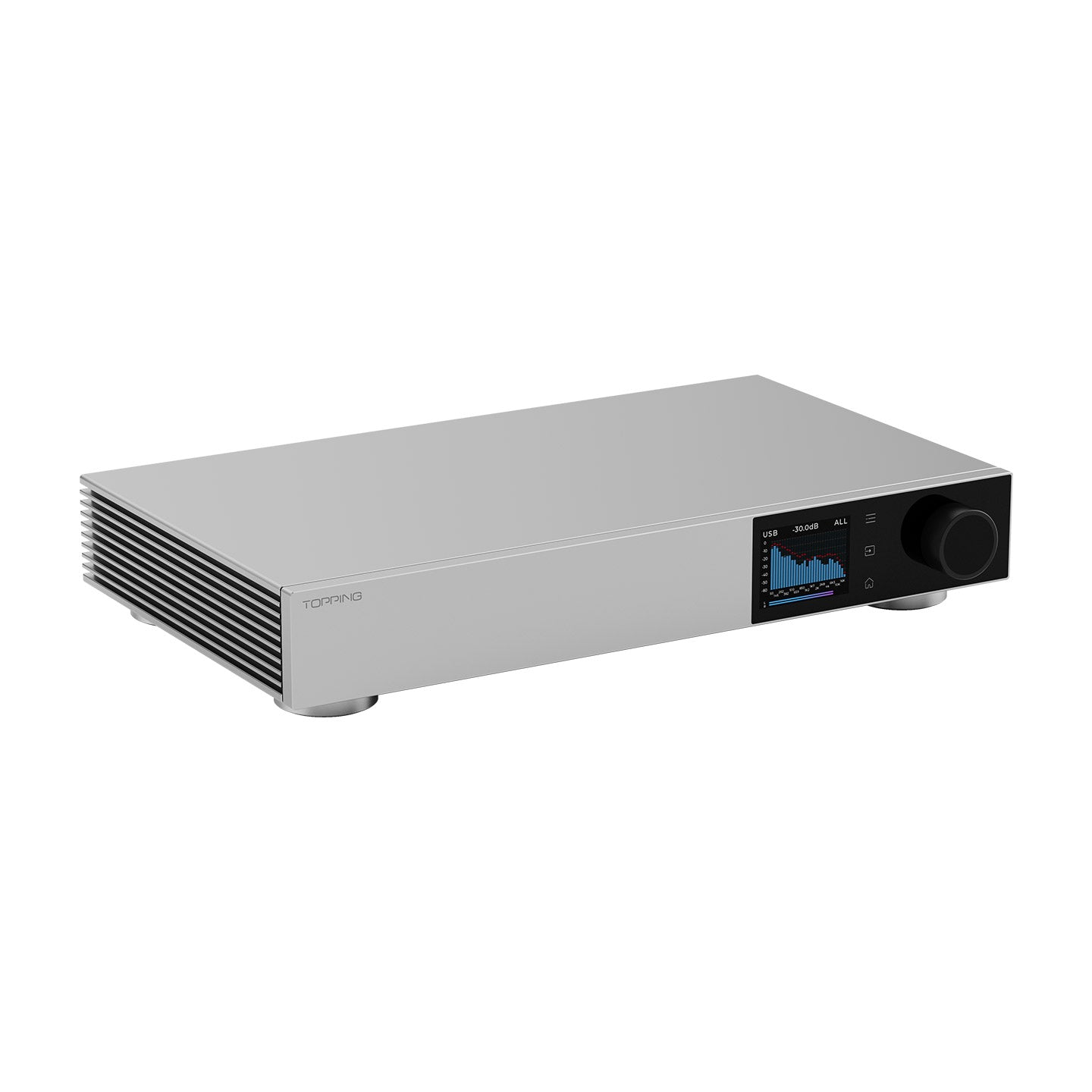
TOPPING Pre900 Fully-Balanced Desktop Pre-Amplifier
Flagship balanced pre-amplifier
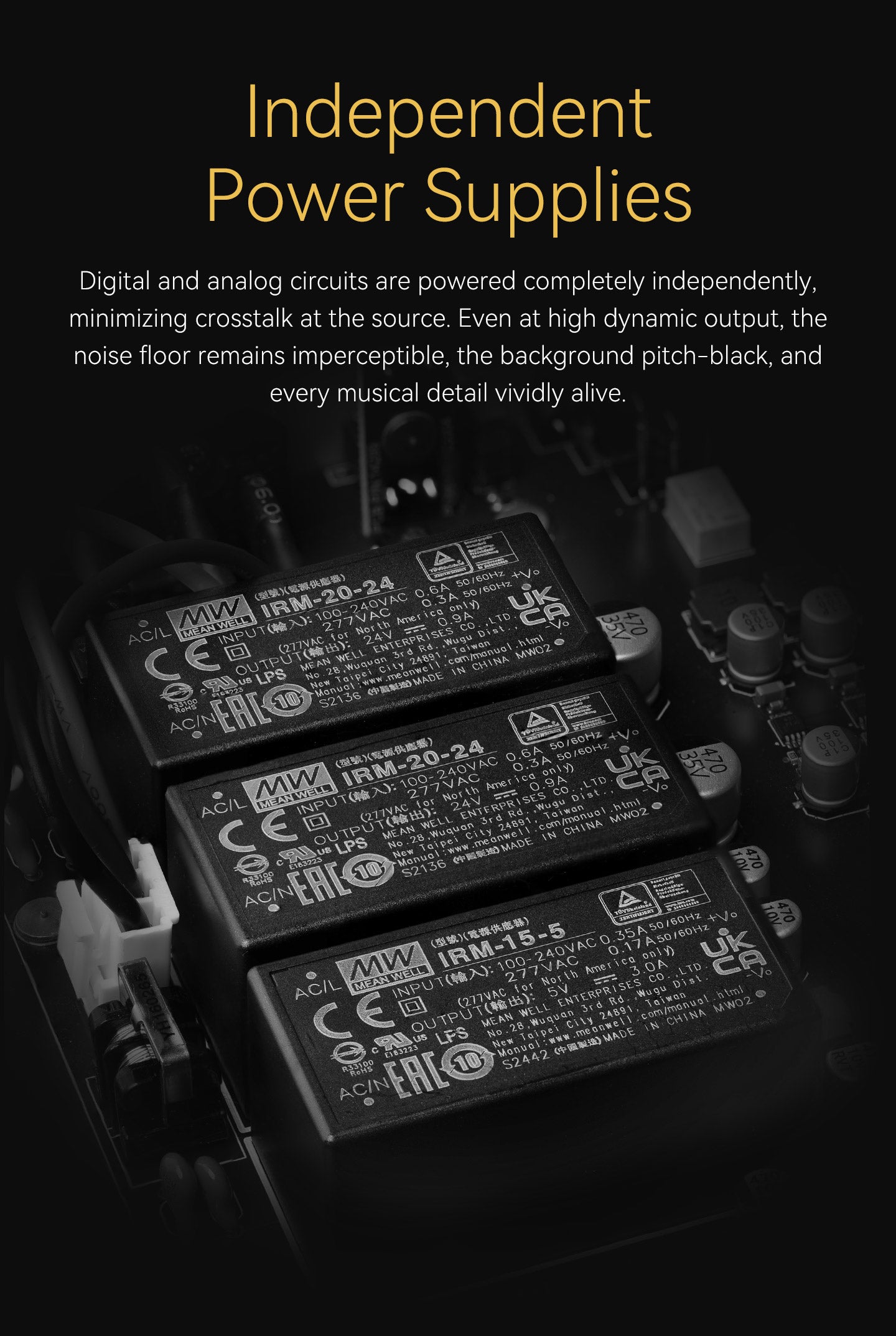
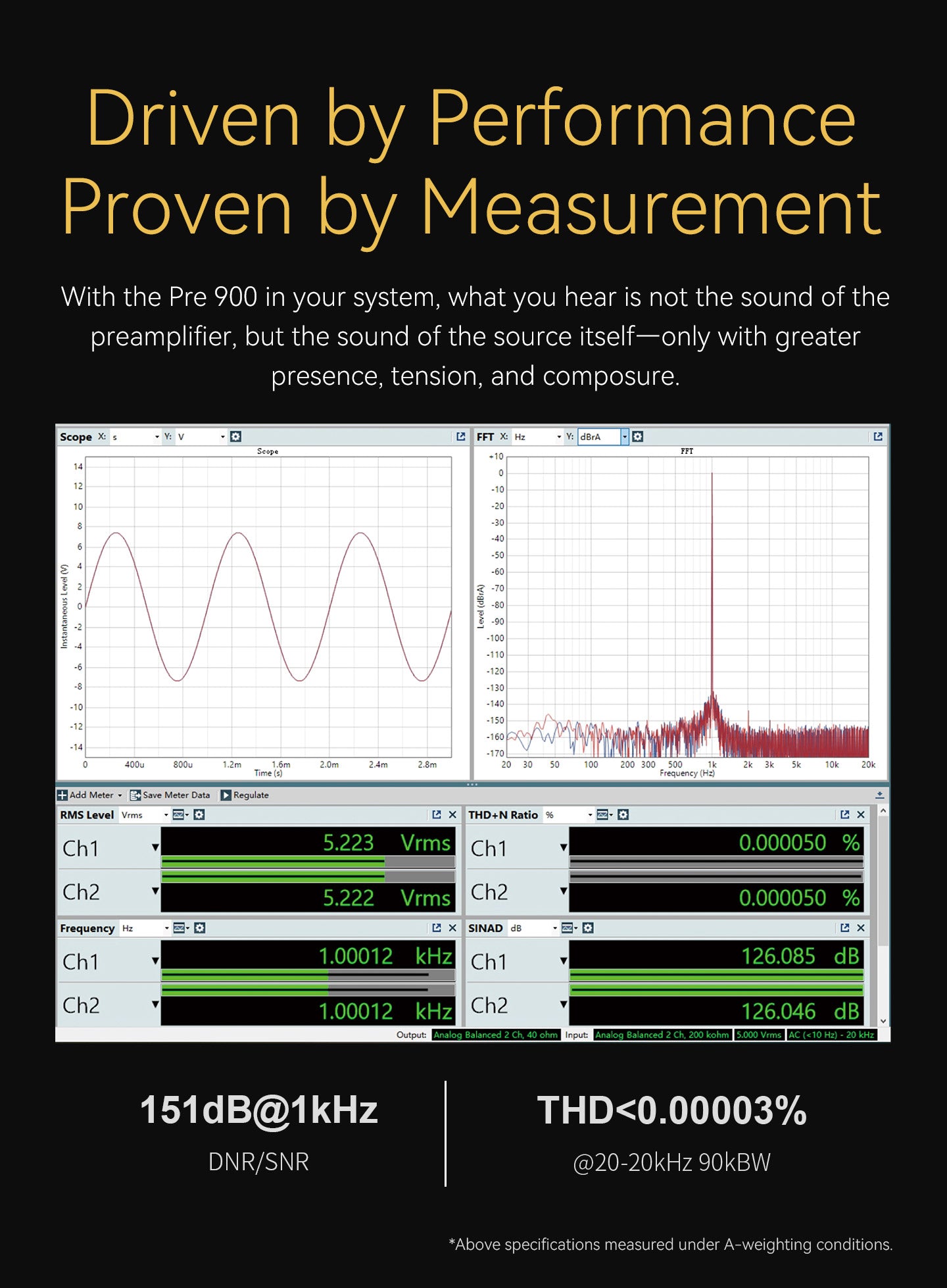
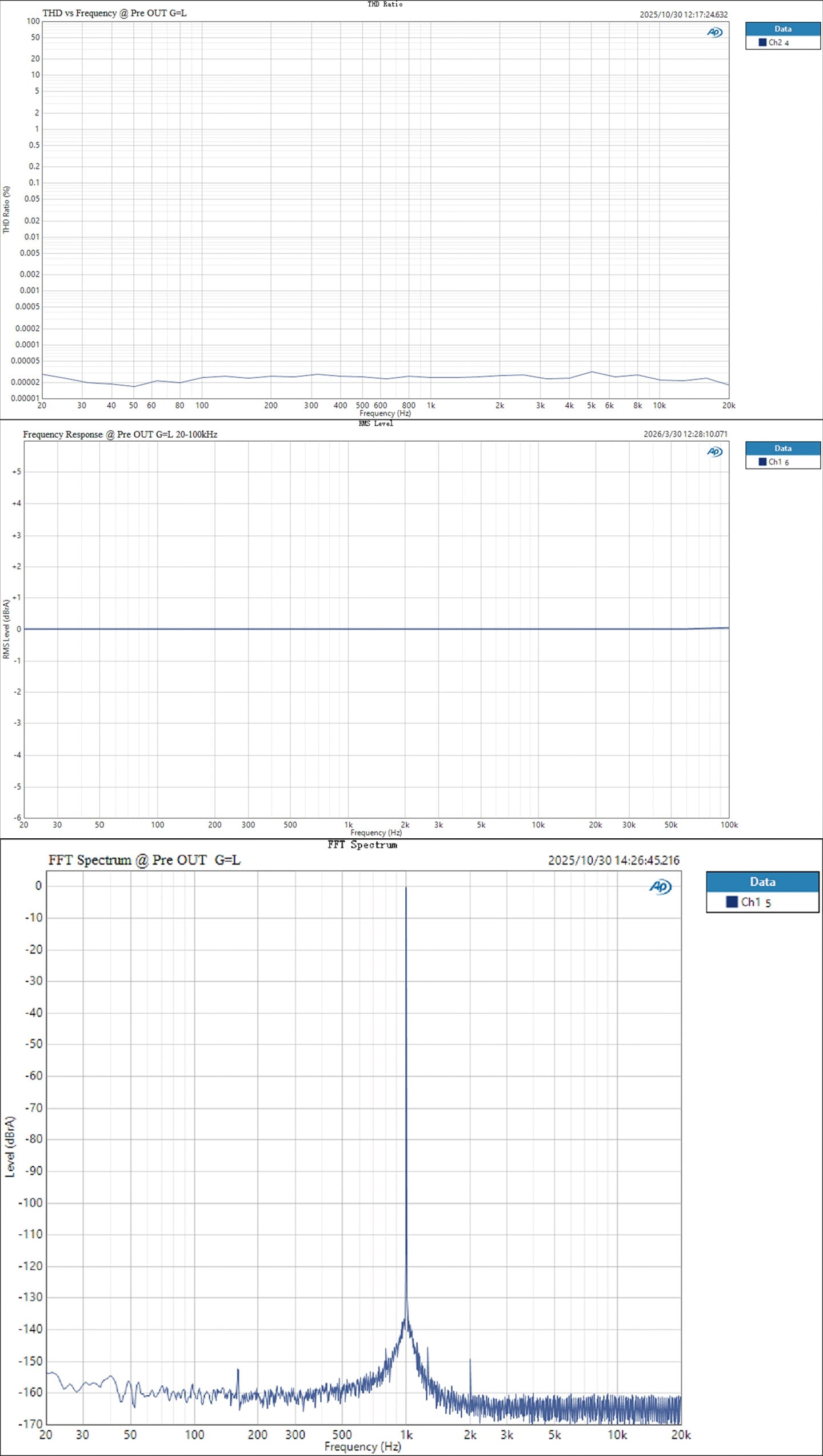
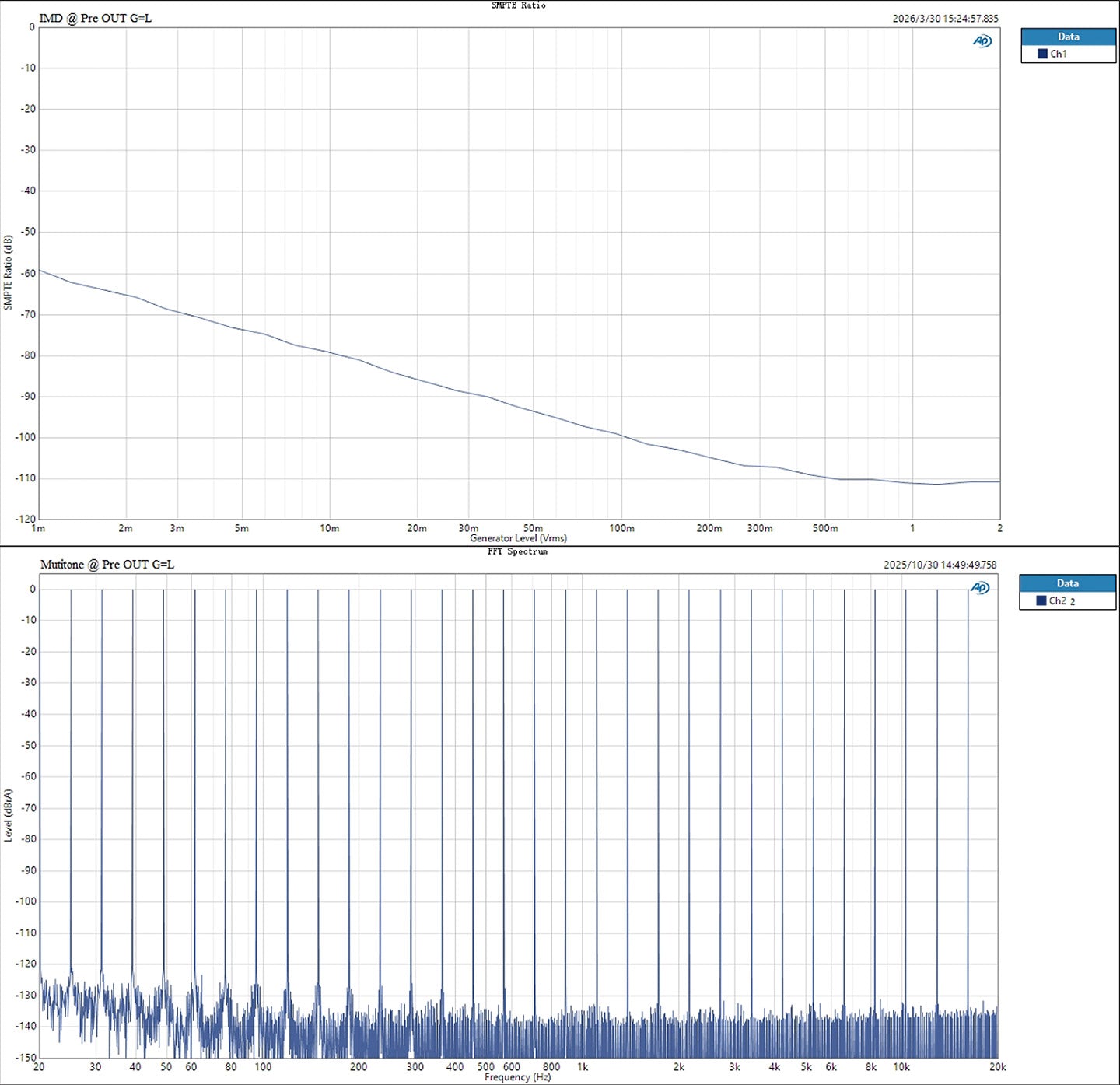
The TOPPING Pre900 is a fully-balanced desktop preamplifier built for a dedicated two-channel system or flagship headphone stack. It combines a four-channel balanced architecture, 0.1 dB relay volume control, three balanced combo inputs, one pair of XLR balanced outputs, independent power supplies, a color display, remote control, and measured performance down to 0.00005% THD+N.
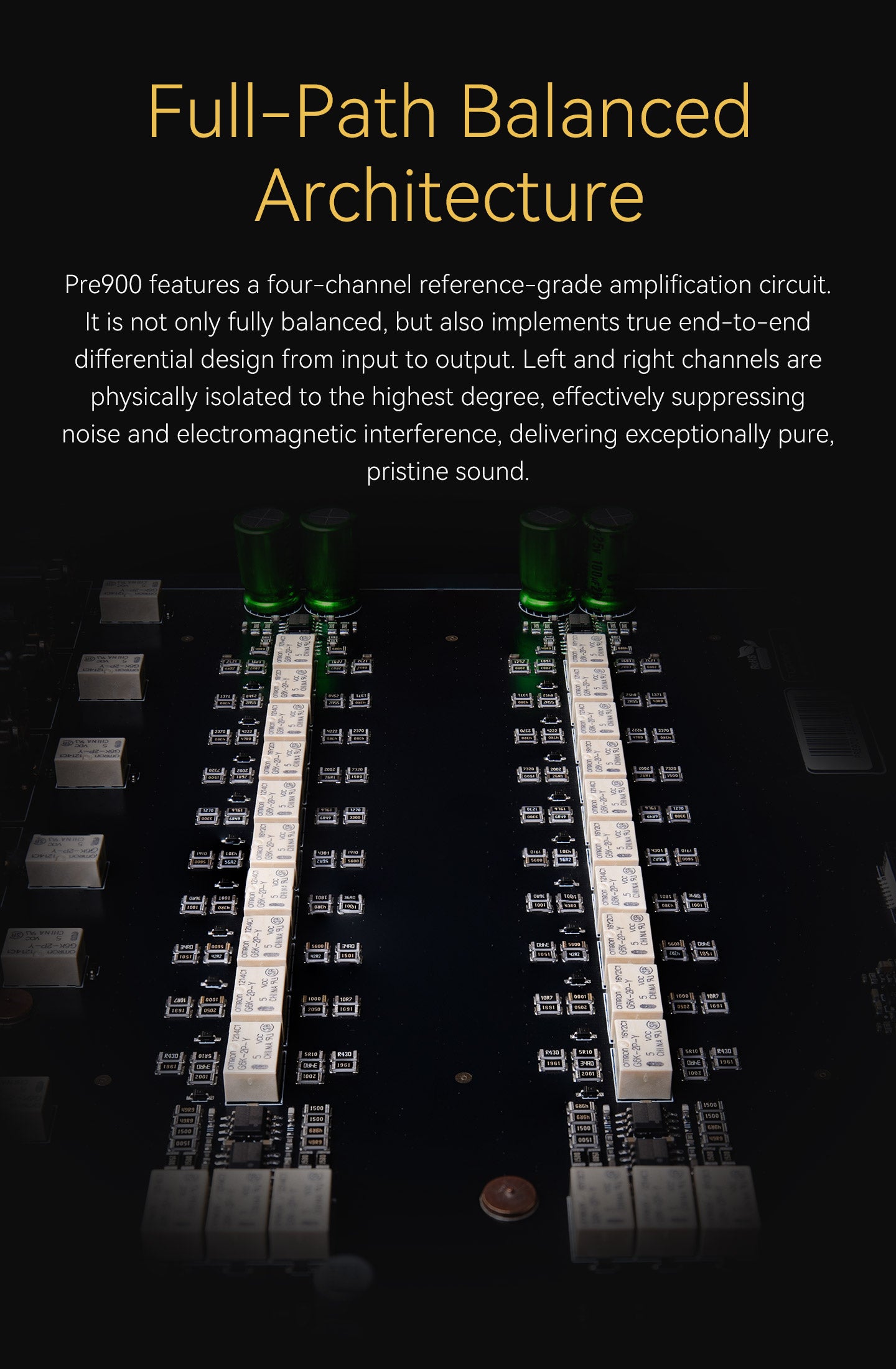
Fully-balanced signal path
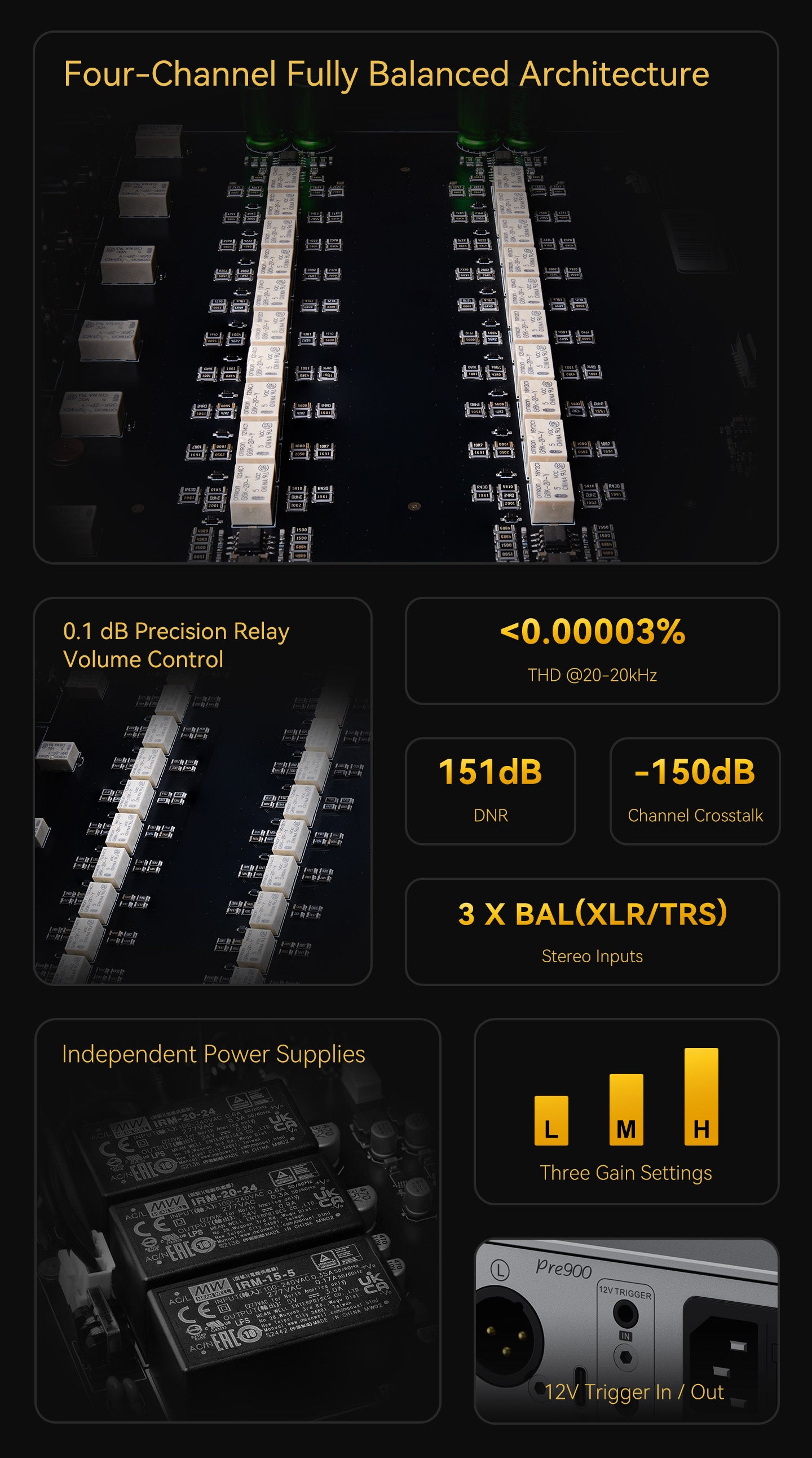
The Pre900 uses a four-channel reference-grade amplification circuit with true end-to-end differential design from input to output. Left and right channels are physically isolated to help suppress noise and electromagnetic interference, giving your source signal a clean path through the preamp.
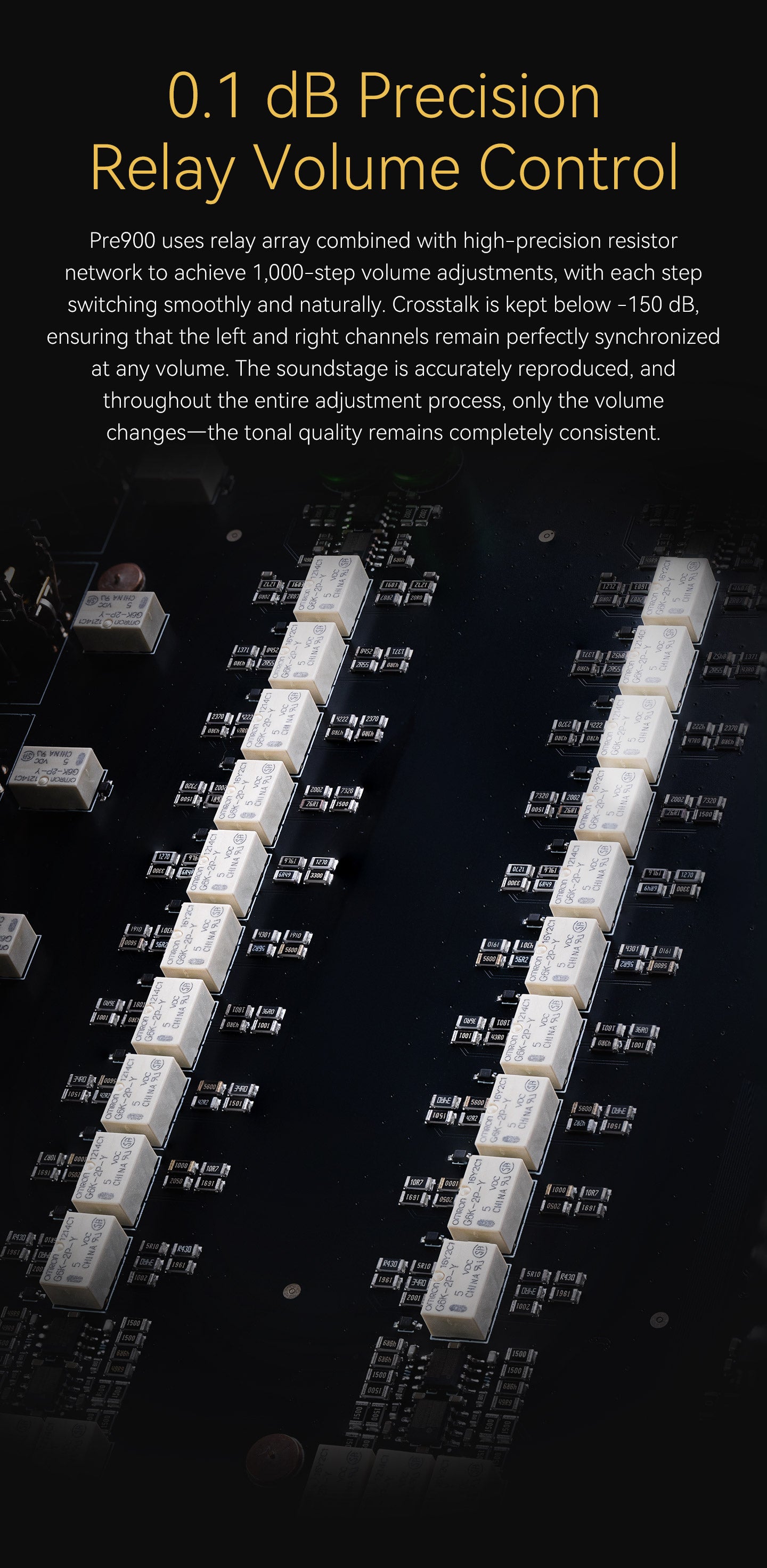
Relay volume control
A relay array and high-precision resistor network give the Pre900 1,000 steps of volume adjustment in 0.1 dB increments. That means you can make small, repeatable changes without throwing off channel balance. Crosstalk is kept below -150 dB, guaranteeing that the left and right channels stay synchronized as volume changes.
Headroom for demanding systems
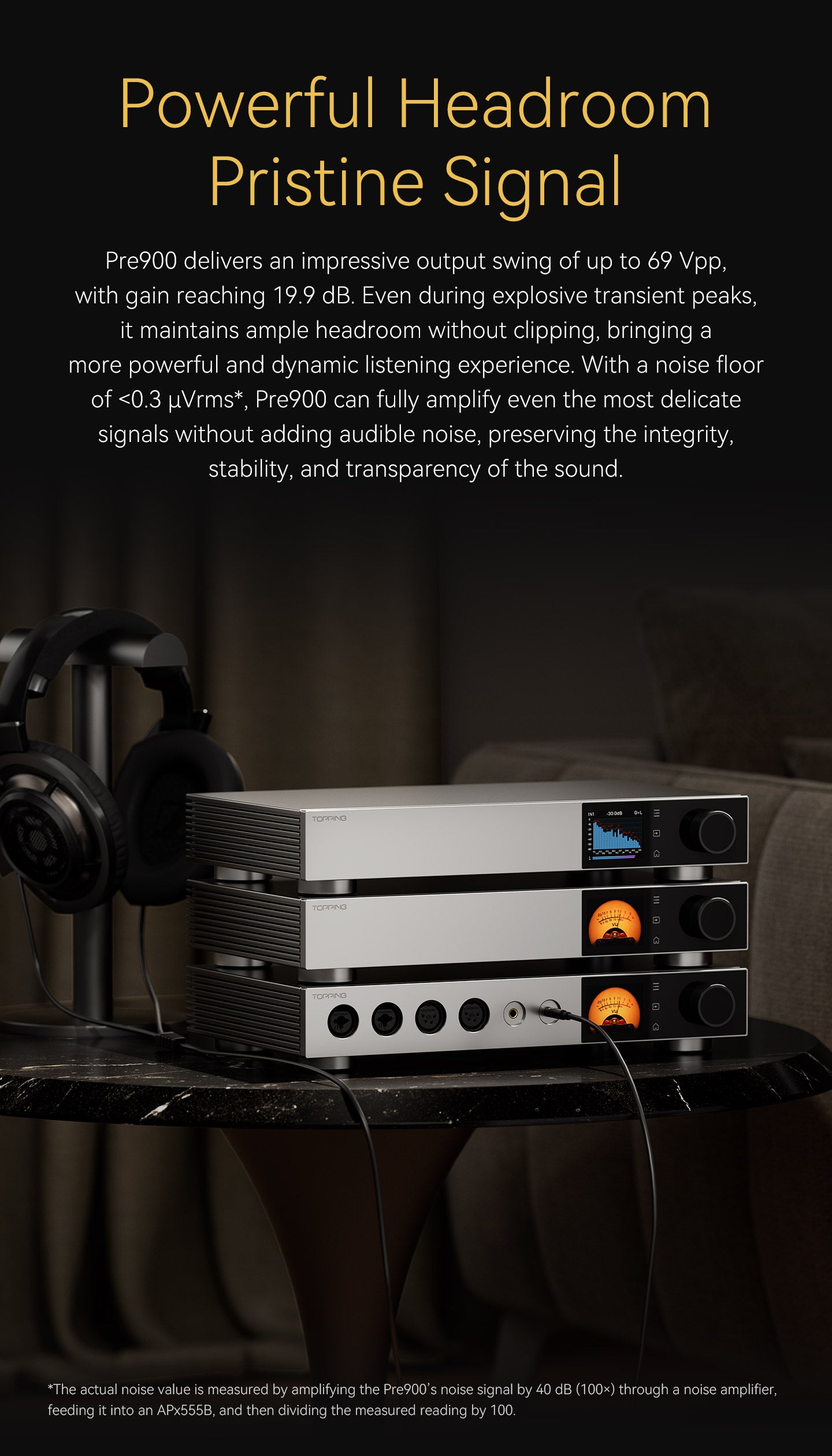
With output swing up to 69 Vpp and gain up to 19.9 dB, the Pre900 gives your system room to handle transient peaks without clipping. Its actual noise level is rated below 0.3 μVrms at low gain, so delicate signals can be amplified without adding audible noise.
Three balanced inputs
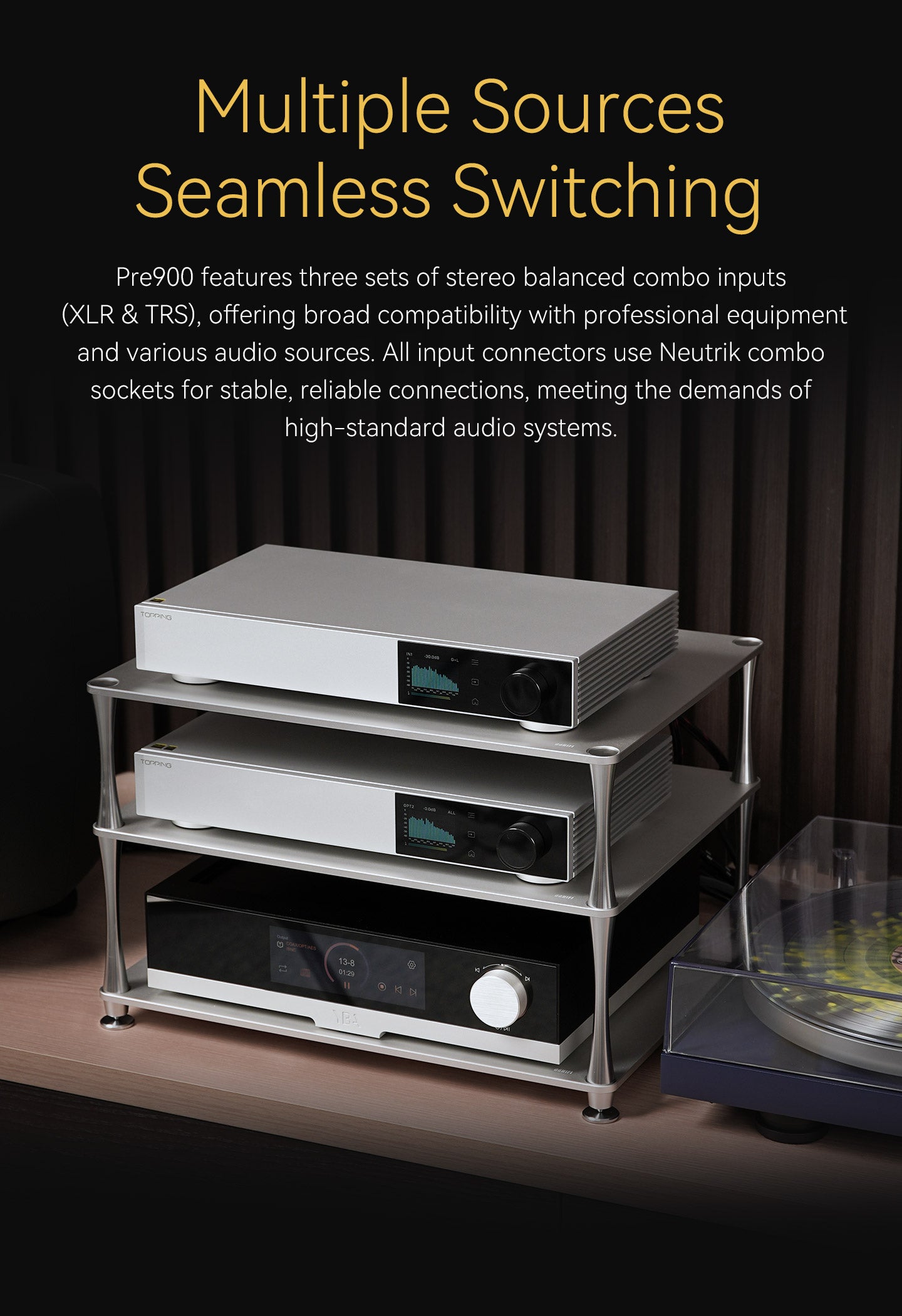
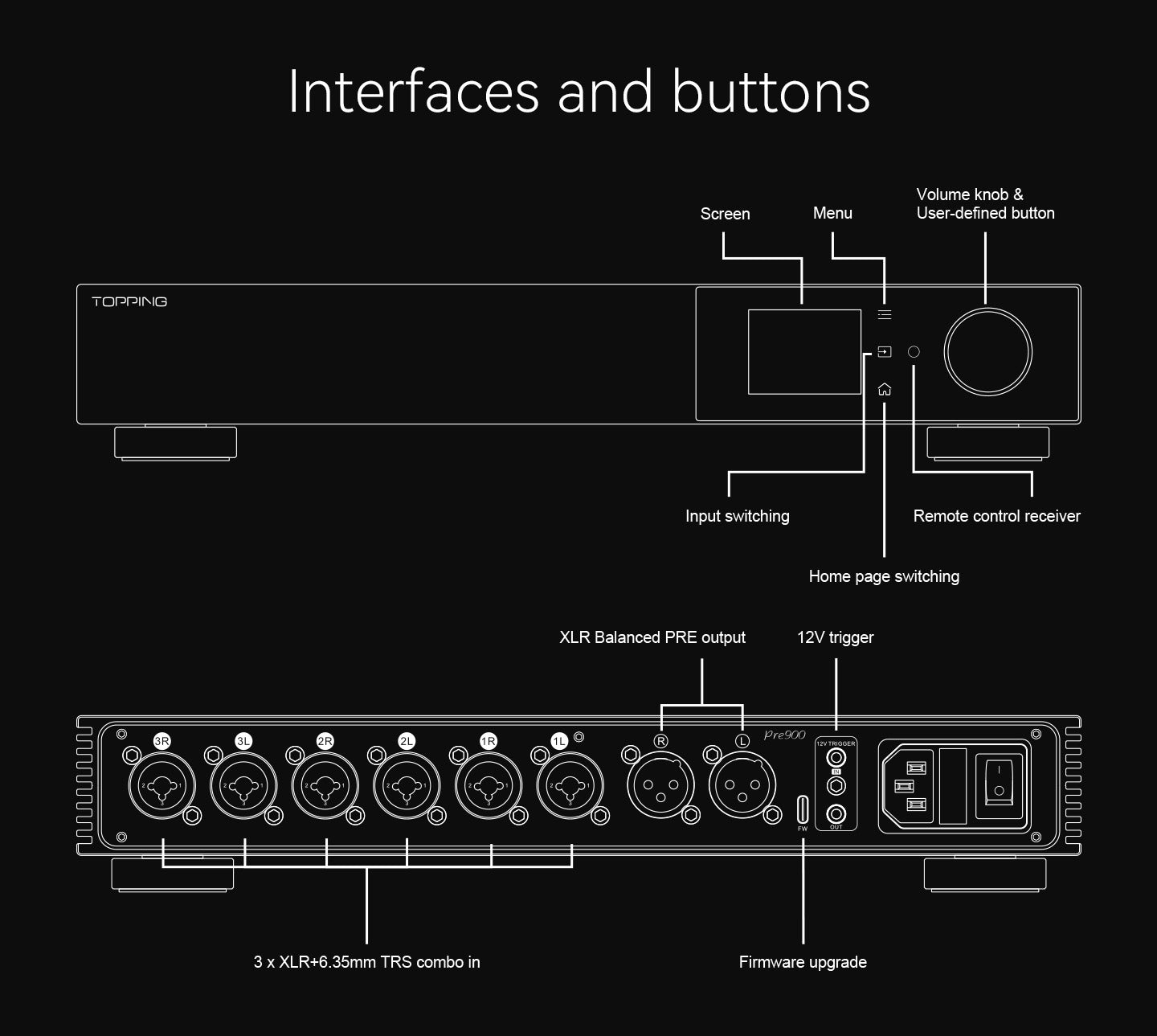
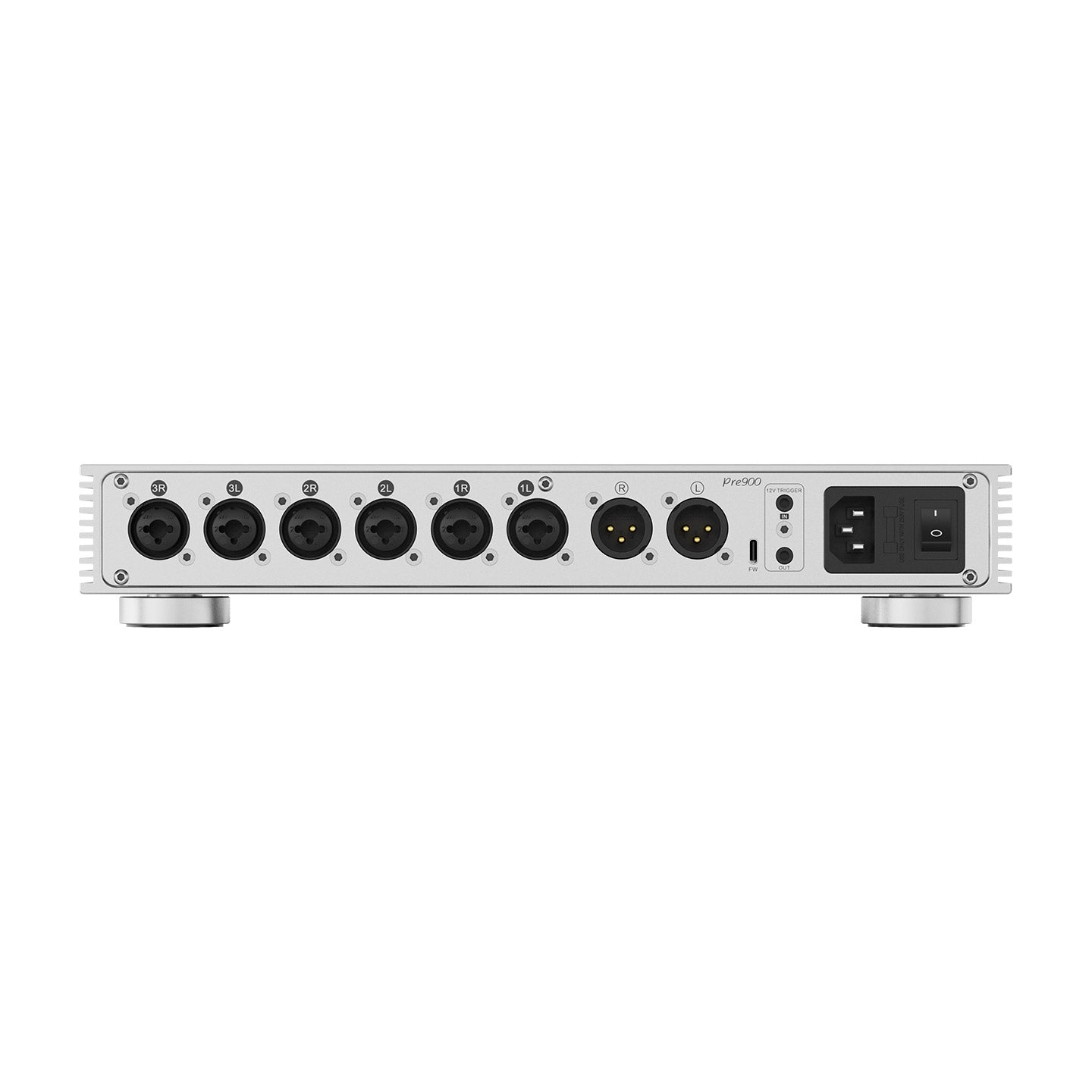
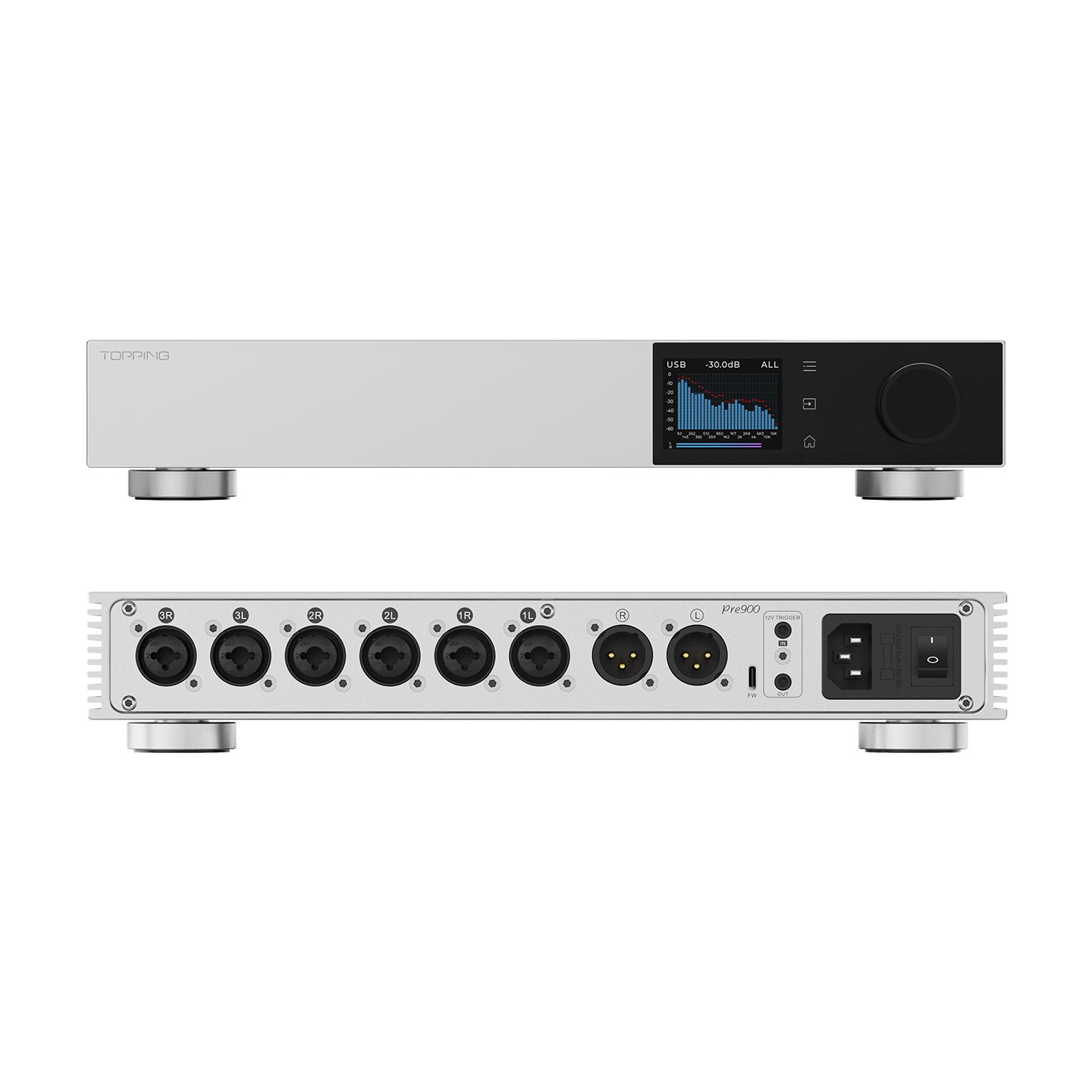
Three sets of stereo balanced combo inputs support both XLR and 6.35mm TRS connections. The inputs use Neutrik combo sockets, making the Pre900 easy to integrate with DACs, studio gear, and other balanced sources.
Focused balanced output
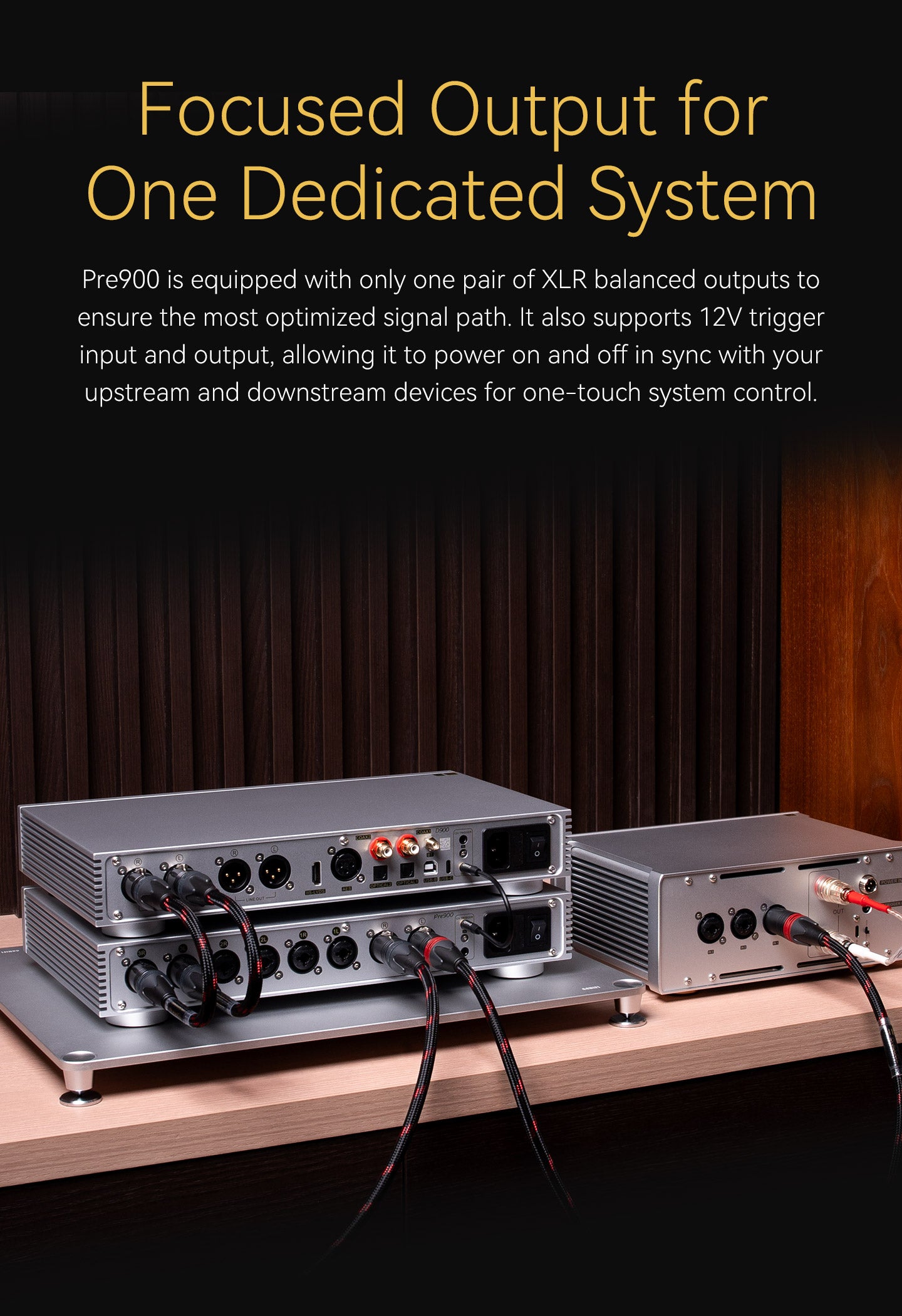
The Pre900 includes one pair of XLR balanced outputs for a clean, dedicated signal path. It also supports 12V trigger input and output, so compatible upstream and downstream devices can power on and off together.
Responsive control
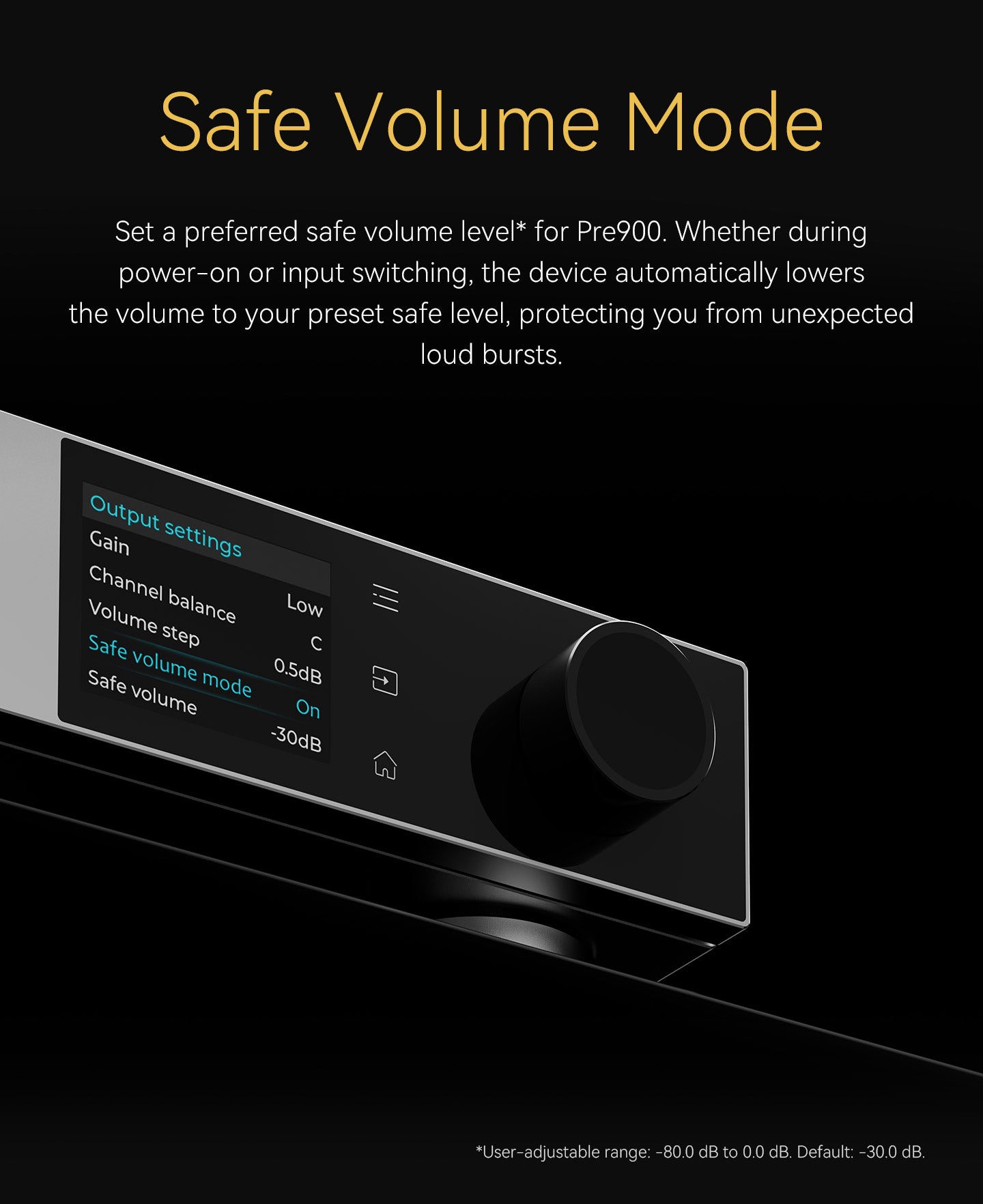
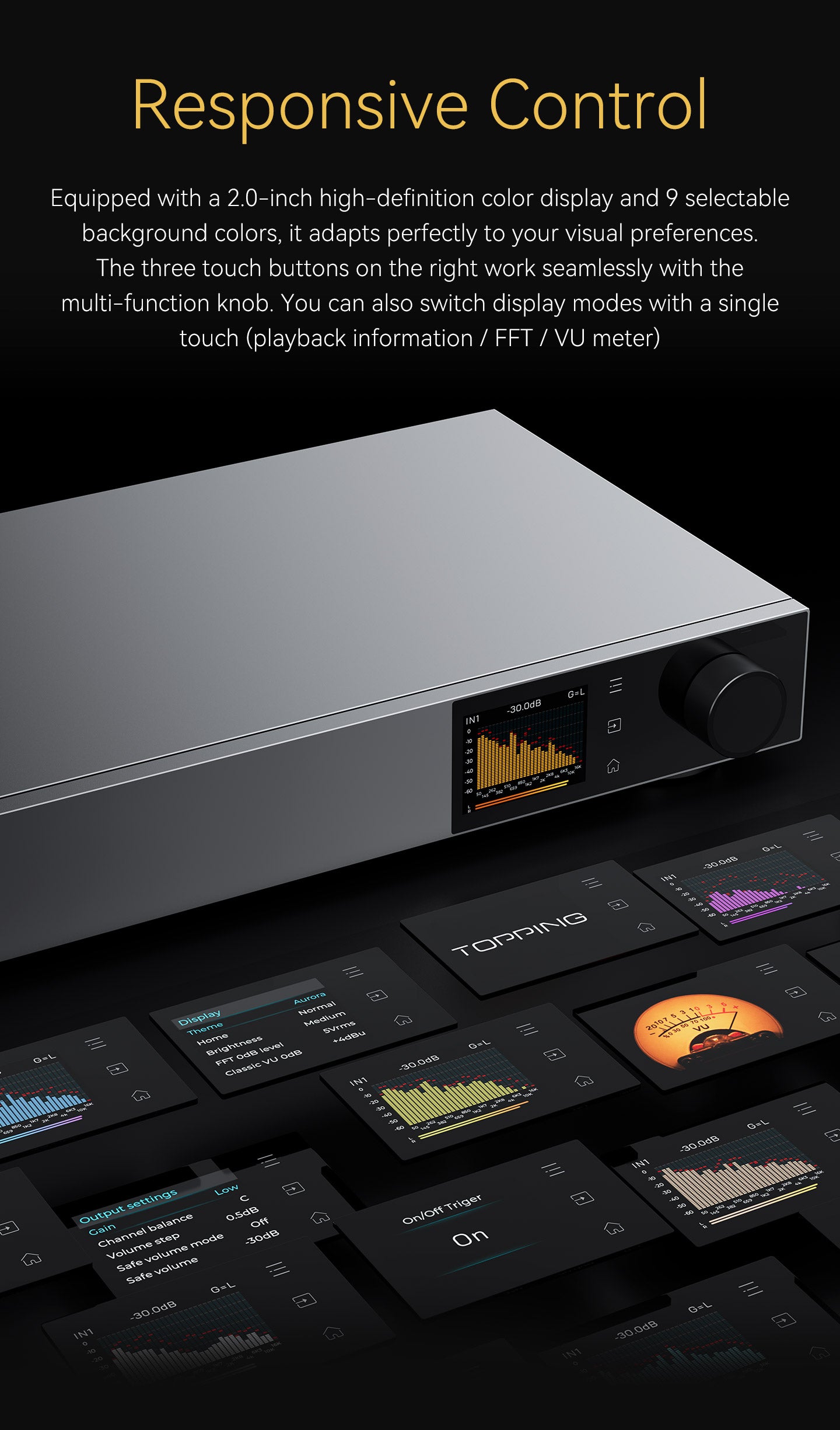
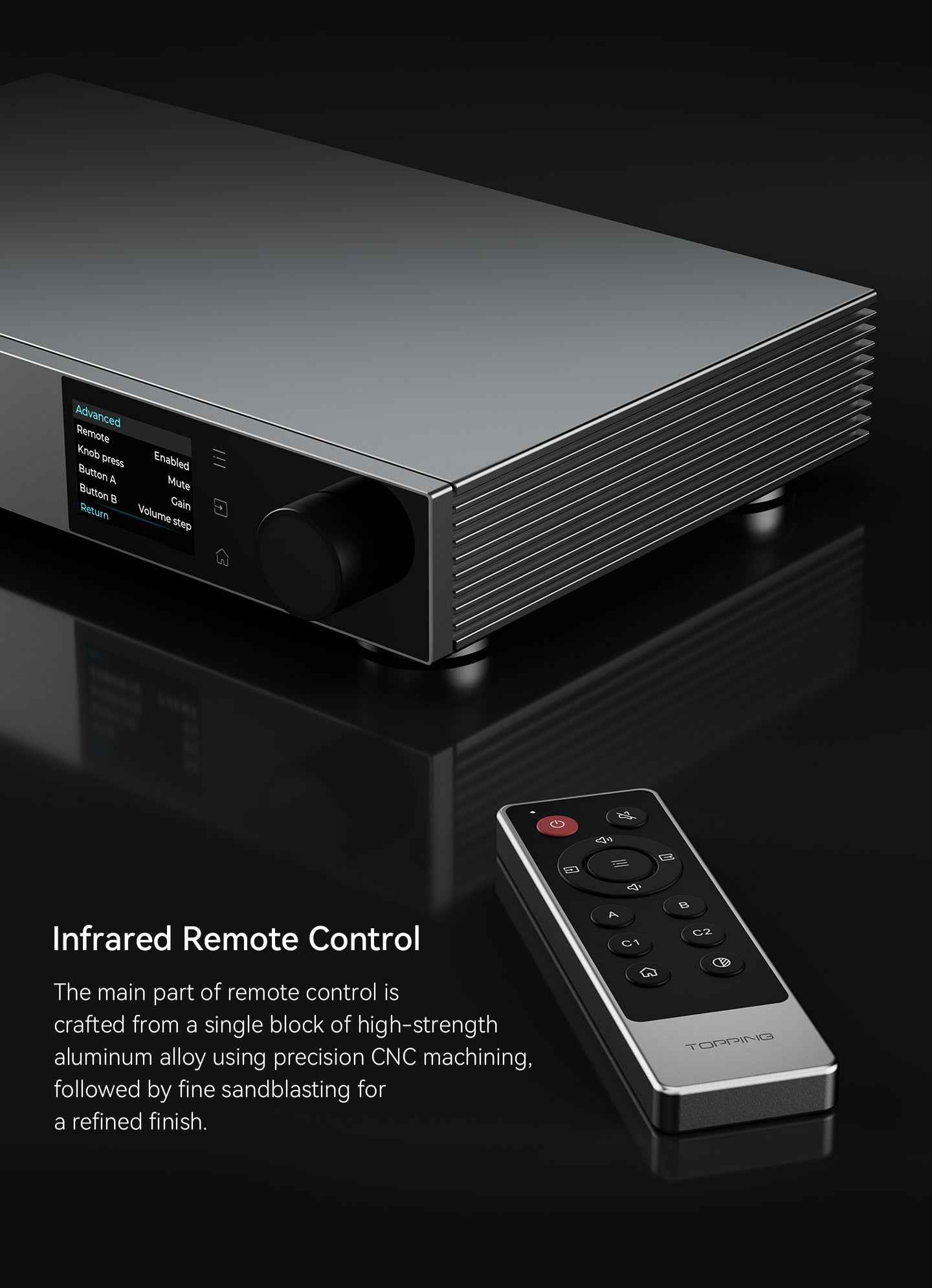
A 2.0-inch high-definition color display gives you clear access to playback information, FFT view, VU meter mode, gain, channel balance, safe volume, and other settings. Three touch buttons work with the multifunction knob, while the included infrared remote gives you control from your listening seat.
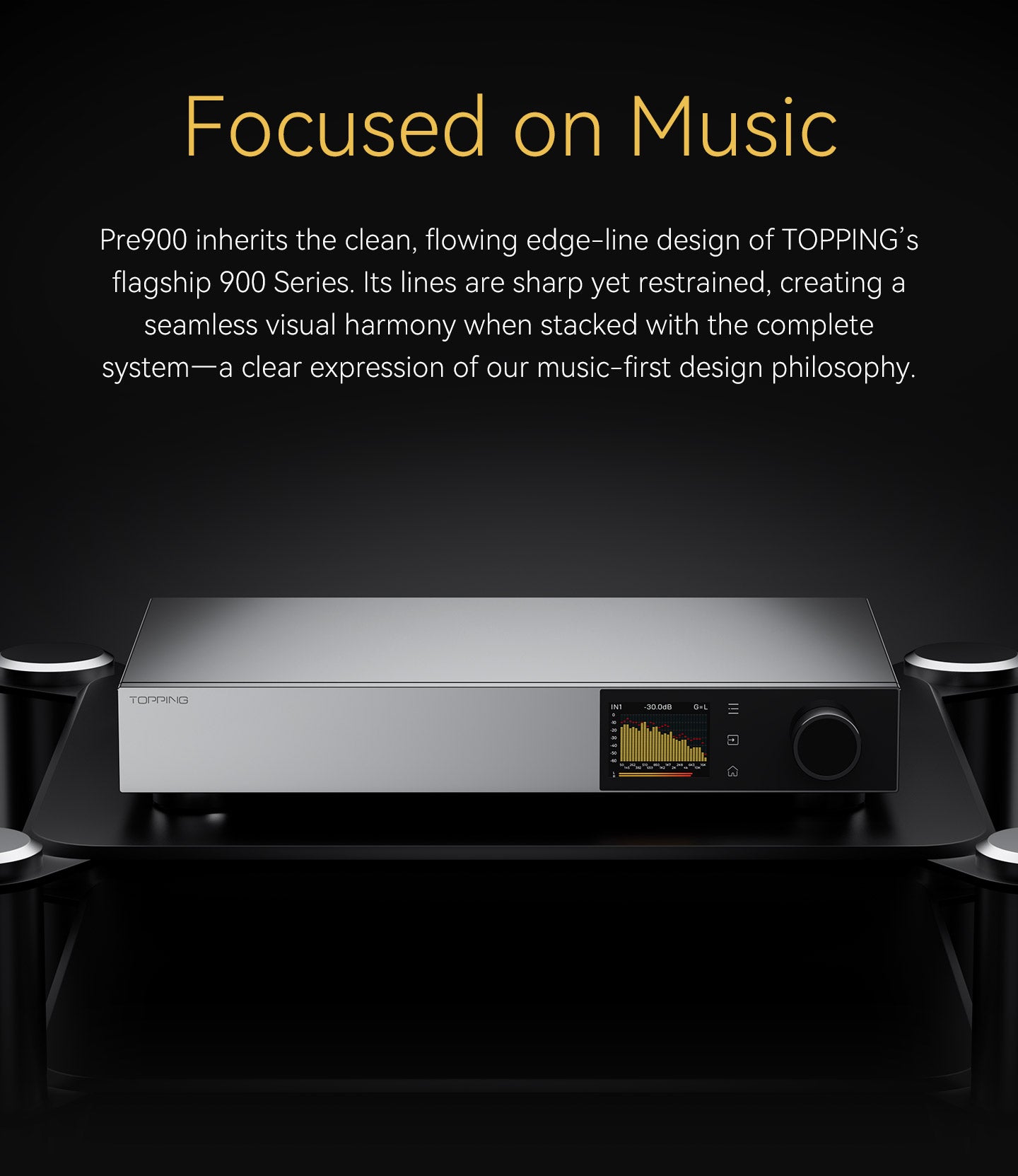
Built for the 900 Series stack
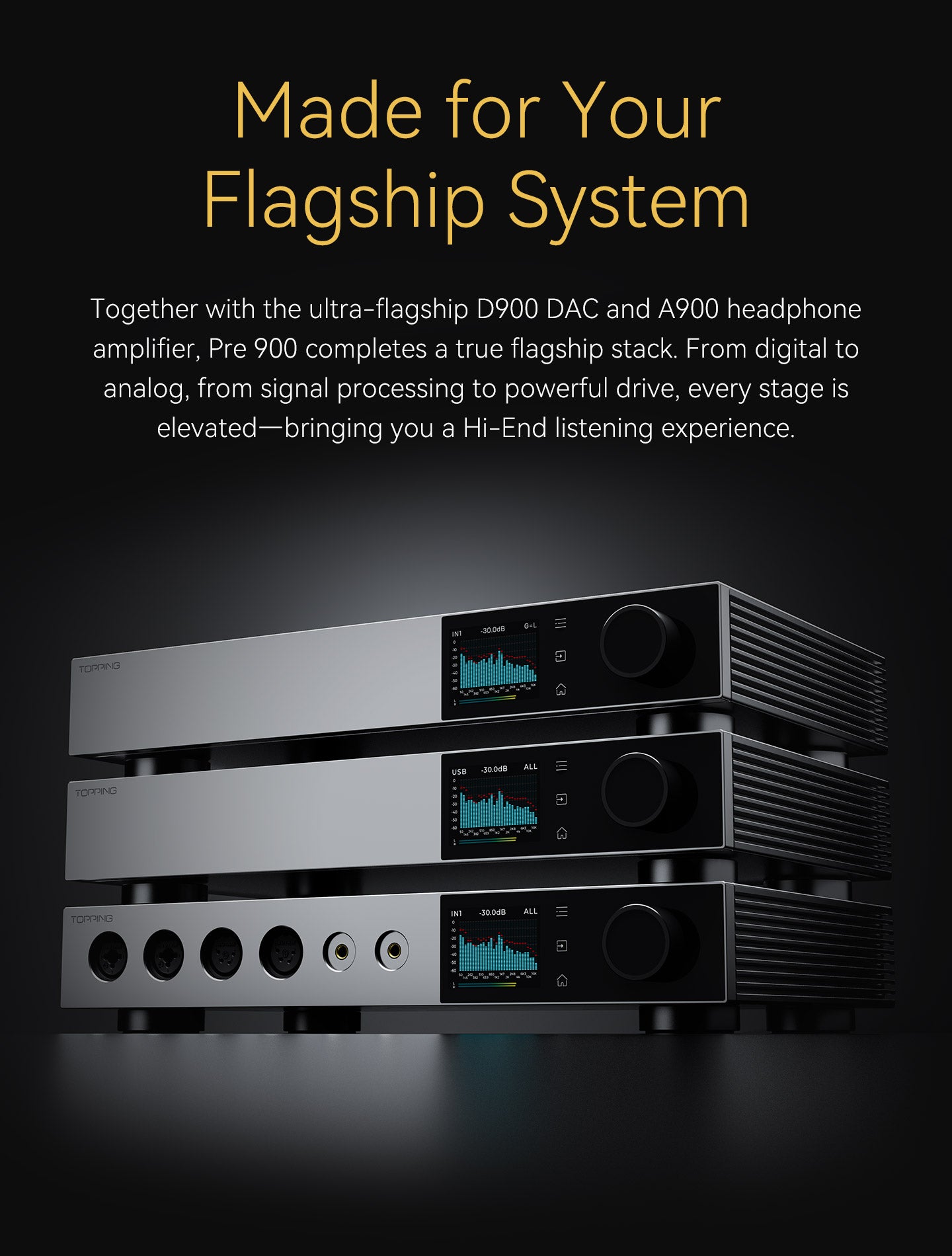
The Pre900 is designed to sit with TOPPING’s D900 DAC and A900 headphone amplifier. Its low-profile chassis, clean edge-line design, and matching visual language make it a natural fit for a compact flagship desktop system.
Product highlights
- Four-channel fully-balanced preamplifier
- True end-to-end differential design
- 0.1 dB precision relay volume control
- 1,000-step volume adjustment
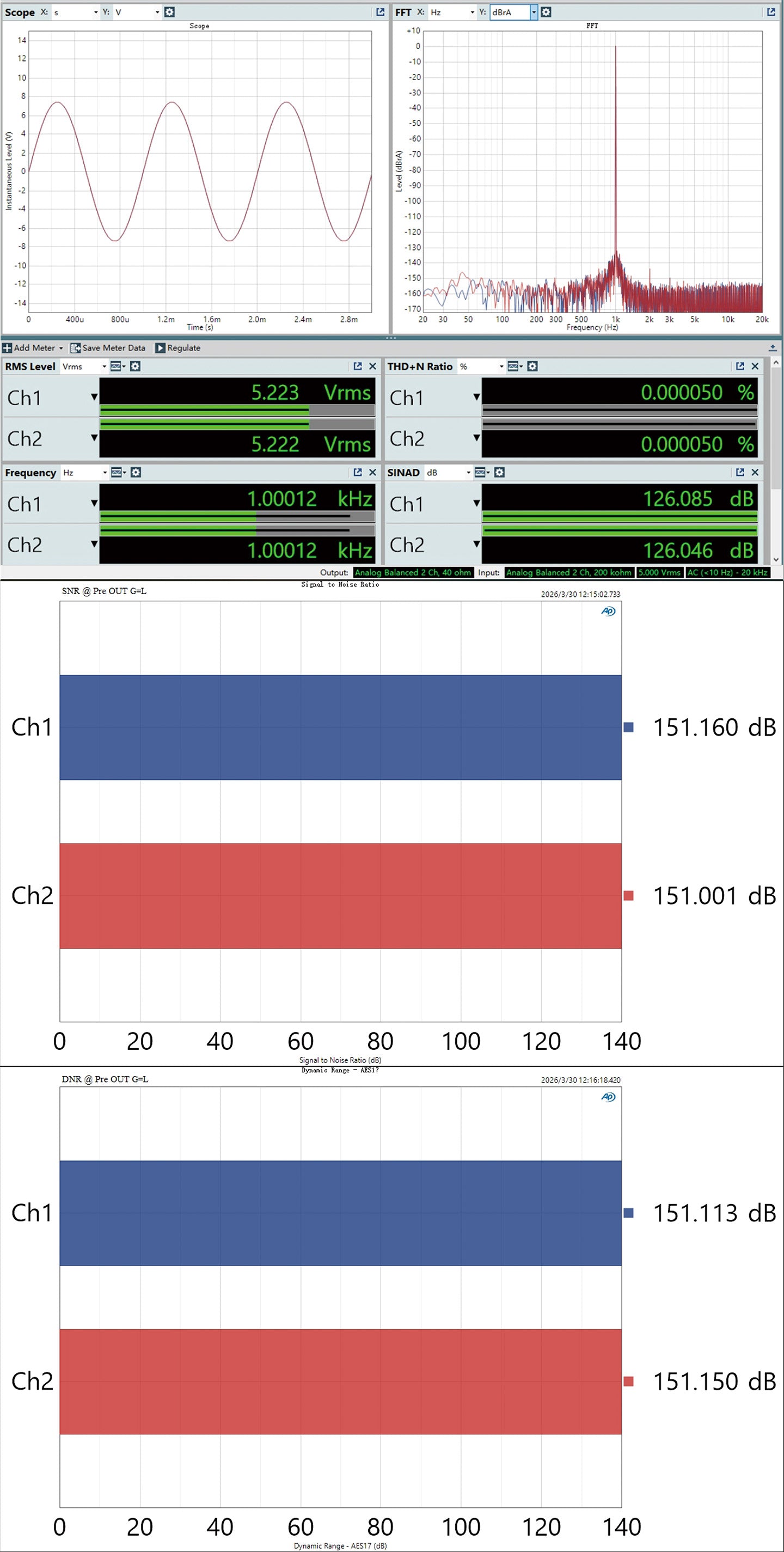
- THD+N rated at 0.00005% at 1kHz A-weighted
- THD rated below 0.00003% from 20Hz to 20kHz
- 151dB SNR and 151dB dynamic range
- Three stereo balanced combo inputs with XLR and 6.35mm TRS support
- One pair of XLR balanced outputs
- Three gain settings — low, medium, and high
- 2.0-inch color display with multiple display modes
- Safe volume mode
- 12V trigger input and output
- Infrared remote control
Specs
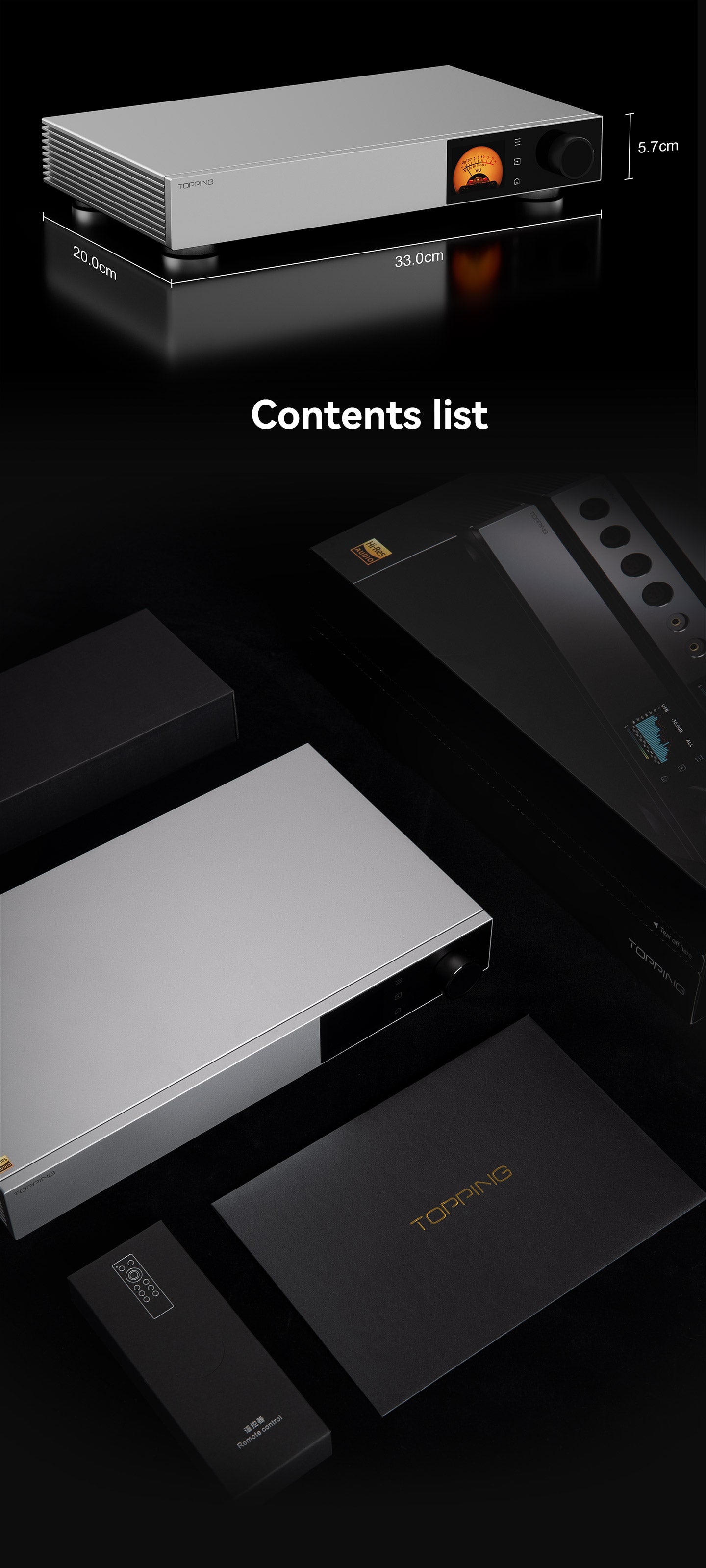
- Dimensions: 13.0 x 7.9 x 2.2 in (33.0 x 20.0 x 5.7 cm)
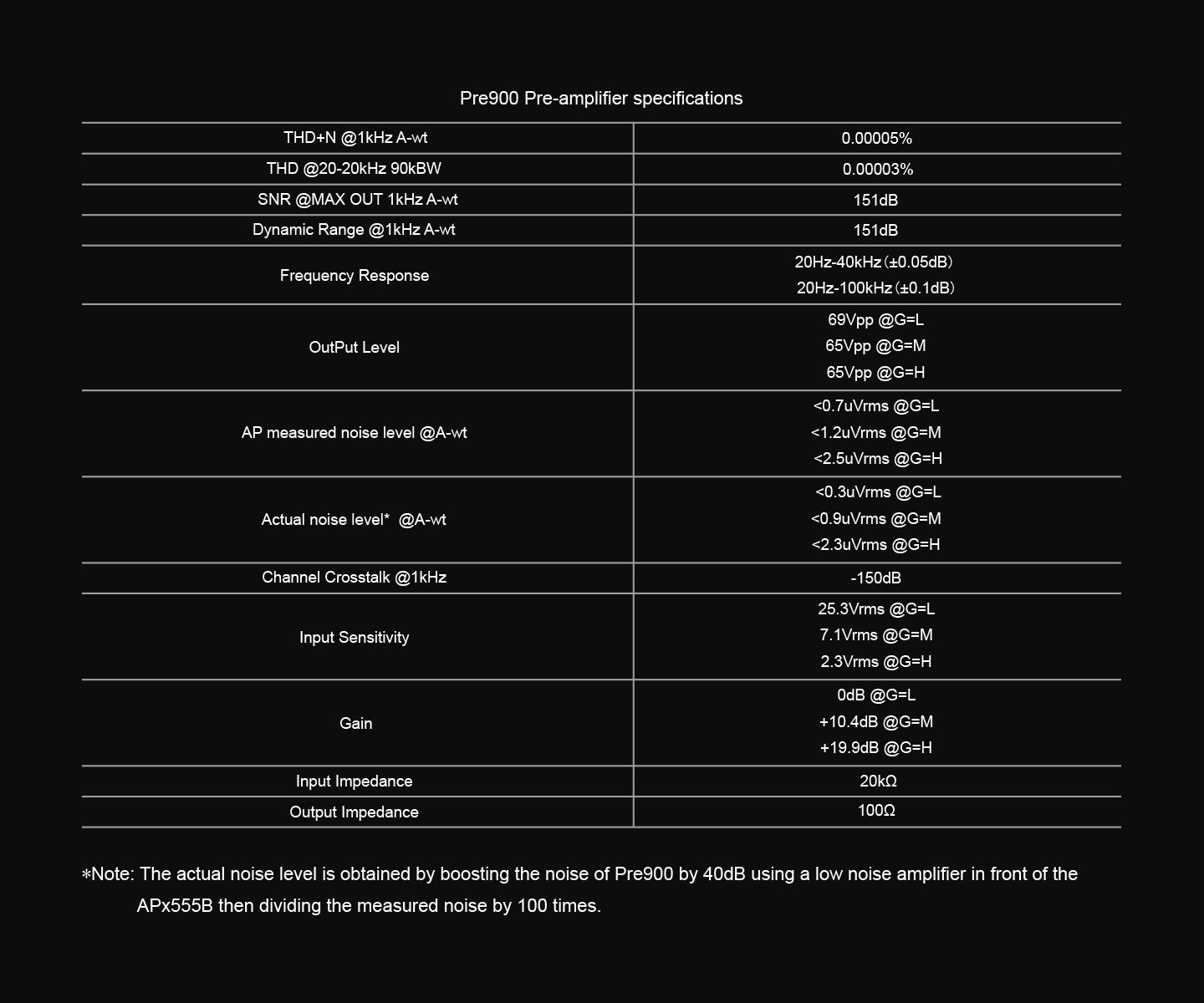
- THD+N at 1kHz A-weighted: 0.00005%
- THD at 20Hz–20kHz 90kBW: 0.00003%
- SNR at max output 1kHz A-weighted: 151dB
- Dynamic range at 1kHz A-weighted: 151dB
- Frequency response: 20Hz–40kHz ±0.05dB, 20Hz–100kHz ±0.1dB
- Output level: 69Vpp at low gain, 65Vpp at medium gain, 65Vpp at high gain
- AP measured noise level: less than 0.7μVrms at low gain, less than 1.2μVrms at medium gain, less than 2.5μVrms at high gain
- Actual noise level: less than 0.3μVrms at low gain, less than 0.9μVrms at medium gain, less than 2.3μVrms at high gain
- Channel crosstalk at 1kHz: -150dB
- Input sensitivity: 25.3Vrms at low gain, 7.1Vrms at medium gain, 2.3Vrms at high gain
- Gain: 0dB low, +10.4dB medium, +19.9dB high
- Input impedance: 20kΩ
- Output impedance: 100Ω
- Inputs: 3 x XLR and 6.35mm TRS combo stereo balanced inputs
- Outputs: XLR balanced preamp output
- Trigger: 12V trigger input and output
What’s included
- TOPPING Pre900 preamplifier
- Infrared remote control
- User documentation
Choose options
Overall rating: 0.0 / 5 from 0 reviews.
AI Generated Review Summary
Summary topics
Review topics: [].