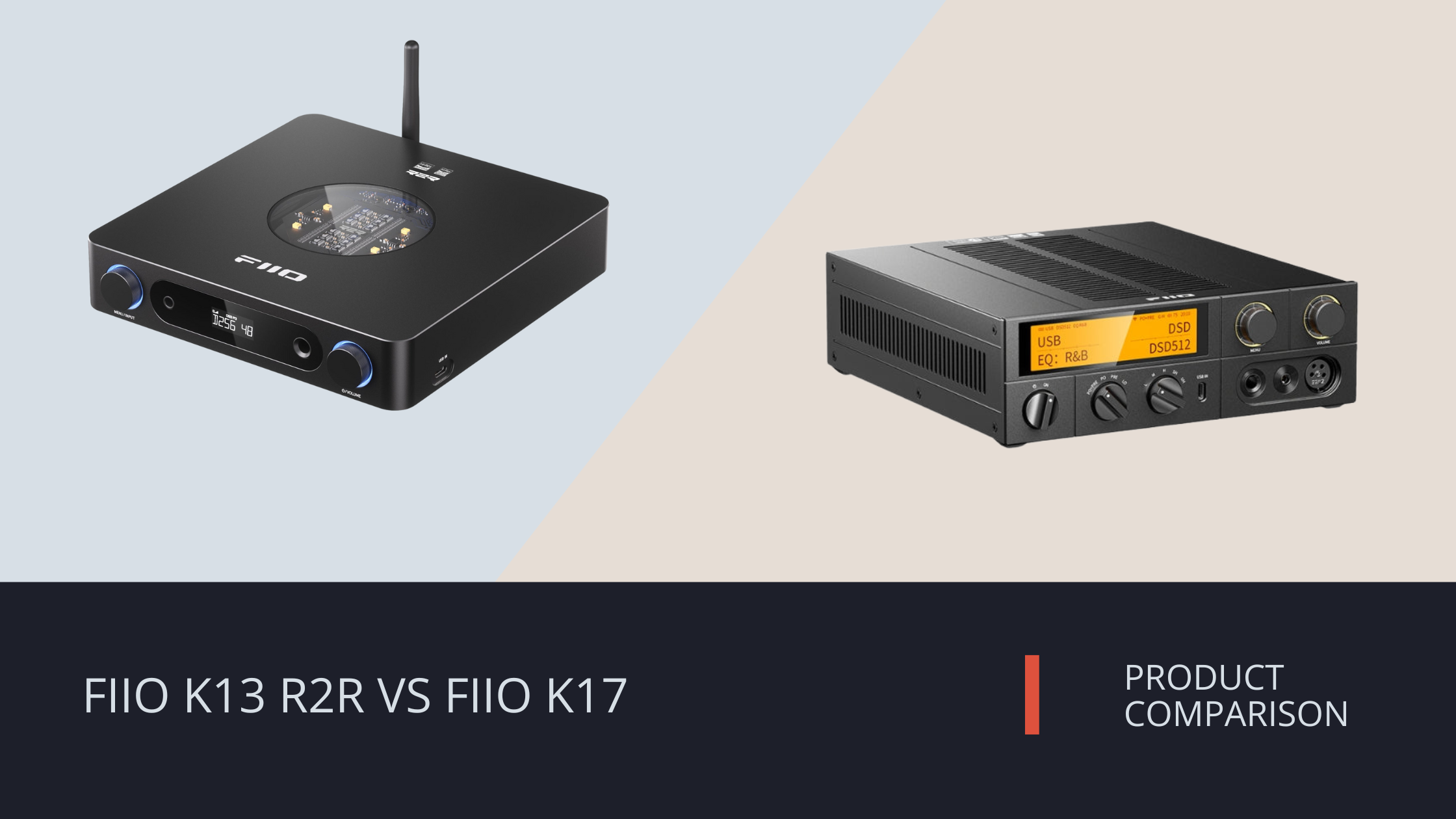
Article: FiiO K13 R2R Desktop DAC/Amp vs HIFIMAN EF499 DAC/Amp
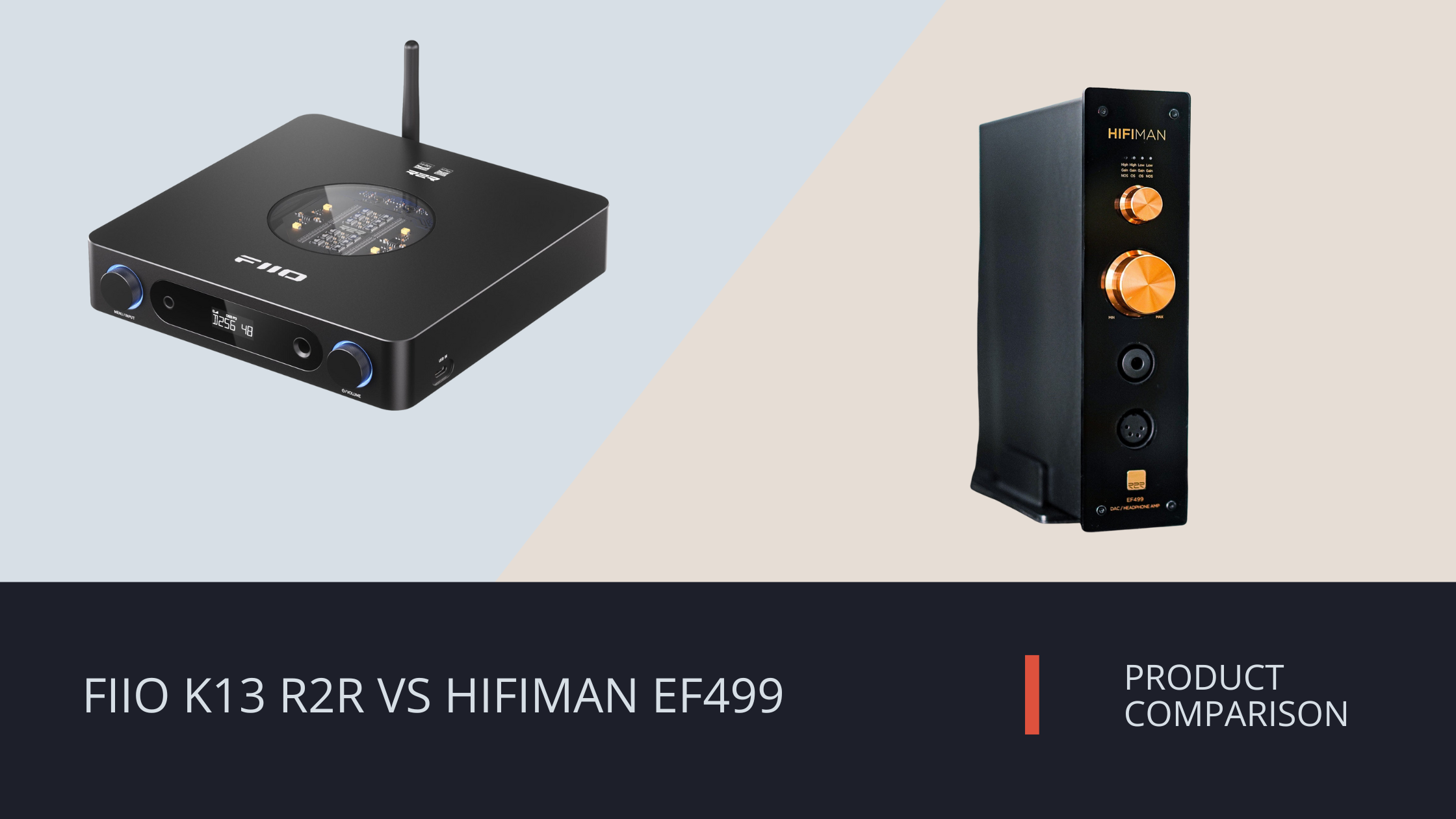
FiiO K13 R2R Desktop DAC/Amp vs HIFIMAN EF499 DAC/Amp
How two entry-level desktop DAC/amps differ in architecture, tuning priorities, and system role
In this post, we’ll walk through how the FiiO K13 R2R and HIFIMAN EF499 compare in conversion architecture, output power, usability, and engineering design—and where each might make the most sense in a desktop chain.
Overview
The FiiO K13 R2R is a compact all-in-one desktop DAC/amp built around a 24-bit discrete R2R ladder. It focuses on linearity, low noise, and a clean gain structure in a small chassis. With balanced and single-ended headphone outputs, USB-C input, and a simple two-gain stage, it targets listeners who want a neutral, ladder-based source at an accessible price.
The HIFIMAN EF499 takes a different route. It uses an ESS-based delta-sigma DAC section paired with a higher-power headphone amplifier, giving it more headroom for planars and higher-impedance headphones. HIFIMAN also positions the EF499 as a value entry point into their desktop amplifier line, adding tone controls and multiple digital inputs.
In rough terms:
- The K13 R2R emphasizes a compact form factor, discrete ladder conversion, and straightforward desktop usability.
- The EF499 delivers more output power, wider input support, and a familiar ESS tuning profile.
Architecture & Conversion Approach
K13 — 24-bit R2R ladder
The K13 uses a discrete resistor ladder DAC. Each bit corresponds to matched resistors switched at high speed to create a linear analog output. This avoids delta-sigma noise shaping and produces a direct, time-stable conversion path.
For the listener, it offers predictable behavior with low noise and minimal digital processing artifacts. FiiO pairs the ladder with a discrete amplifier stage capable of 3.6 W balanced output at 32 Ω.
EF499 — ESS delta-sigma conversion
The EF499 employs an ESS chipset, using oversampling, noise shaping, and time-domain jitter suppression. Its internal amplifier section outputs more current than the K13, giving it an advantage with low-sensitivity planars.
Delta-sigma conversion provides high dynamic range, stable measurement performance, and broad format compatibility.
Both units deliver low distortion, but their conversion philosophies differ. The K13 appeals to listeners who prefer resistor-ladder behavior, while the EF499 uses ESS transparency and power as its foundation.
Features & Connectivity Comparison
| Feature | FiiO K13 R2R | HIFIMAN EF499 |
|---|---|---|
| DAC architecture | 24-bit R2R ladder | ESS delta-sigma |
| Amp topology | Discrete stage | High-current amplifier |
| Balanced output | 4.4 mm + XLR-4 | XLR-4 |
| SE output | 6.35 mm | 6.35 mm |
| Max power (balanced) | ~3.6 W @ 32 Ω | Higher than K13 (varies by load) |
| Max power (SE) | ~1.2 W @ 32 Ω | Higher than K13 (varies by load) |
| Gain modes | 2-stage | Multiple, with tone options |
| Digital inputs | USB-C, coaxial, optical | USB, coaxial, optical |
| Line out | RCA | RCA |
| Display | OLED | Front display with tone controls |
| Supported formats | PCM / DSD | PCM up to high rates, DSD via USB |
| Bluetooth | None | None |
The K13 prioritizes compact, direct USB-C connectivity and a simple feature set. The EF499 adds wider digital input support and onboard tone shaping.
Performance Comparisons & Trade-offs
Output power and load handling
The EF499 offers more current and voltage headroom, making it better suited for demanding planars. The K13’s discrete stage provides solid power for most modern headphones but is optimized for desktop efficiency rather than maximum drive capability.
Noise floor and linearity
The K13’s R2R ladder maintains stable low-level detail without modulator-shaped noise. The EF499’s ESS DAC has competitive THD+N performance and high SNR, giving it a very quiet background.
In both cases, distortion is well below audibility.
Form factor and use case
The K13 is compact and straightforward, suitable for smaller desks and focused headphone use.
The EF499 is larger and more versatile, making it a better hub for multi-source listening spaces.
Where Each Makes Most Sense
- If you prefer resistor-ladder DAC behavior:
The K13 R2R offers a clean, predictable ladder implementation with a neutral amplifier stage. - If your headphones need more current or voltage:
The EF499 delivers stronger output, giving planars and higher-impedance models more breathing room. - If your system relies on multiple digital sources:
The EF499’s input variety fits broader desktop or media-center setups. - If you want a compact, minimal desktop unit:
The K13’s chassis and USB-C design make it easy to integrate without complexity.
Product Highlights
FiiO K13 R2R
- 24-bit R2R ladder DAC
- Headphone amplifier stage
- 3.6 W @ 32 Ω (balanced)
- 1.2 W @ 32 Ω (single-ended)
- USB-C digital, coaxial, and optical inputs
- Two-stage gain control
- Balanced 4.4 mm + XLR-4 outputs
HIFIMAN EF499
- ESS delta-sigma DAC
- High-current headphone amplifier
- XLR-4 and 6.35 mm outputs
- USB, optical, and coaxial digital inputs
- Tone controls
- Wide headphone compatibility
Specs
FiiO K13 R2R
- DAC type: 24-bit R2R ladder
- Output power: ~3.6 W (balanced) / ~1.2 W (SE) @ 32 Ω
- Gain: Low / High
- Inputs: USB-C, Coaxial, Optical
- Outputs: XLR-4, 4.4 mm, 6.35 mm, RCA
- Supported formats: PCM, DSD (via USB)
HIFIMAN EF499
- DAC type: ESS delta-sigma
- Output power: High-current amplifier (varies by load)
- Inputs: USB, coaxial, optical
- Outputs: XLR-4, 6.35 mm, RCA
- Supported formats: PCM, DSD via USB