What Is a DAC in IEM?
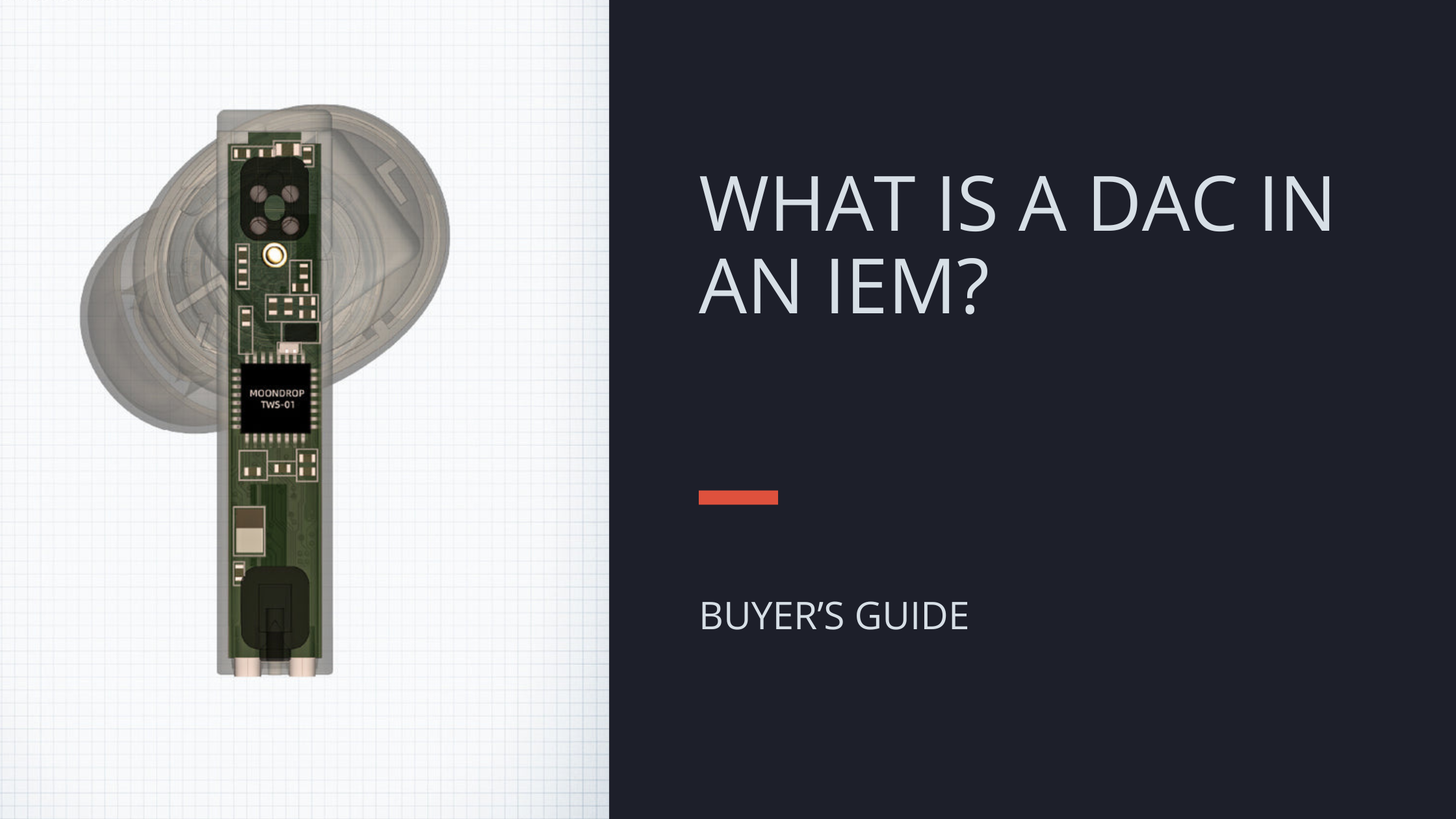
When people talk about DACs, they often think of desktop boxes sitting beside a computer or amplifier. But modern IEMs (in-ear monitors) sometimes include their own DACs built directly into the cable or earphone housing. These compact converters handle the same job as their full-size counterparts: turning digital signals into analog sound. The difference is scale. In an IEM, the DAC is miniaturized to fit into a form factor small enough to wear in your ears.
The Role of a DAC in IEMs
A DAC in an IEM serves one essential purpose — it converts the digital audio signal from your phone, tablet, or computer into an analog signal that drives the earphone drivers.
When you plug an IEM with a USB-C or Lightning connector into your device, you’re connecting to its internal DAC. That DAC replaces the one inside your phone, ensuring consistent decoding quality regardless of the playback device.
Because most modern smartphones no longer include 3.5mm analog outputs, integrating a DAC inside the IEM (or its cable) has become a practical solution. It means users can still enjoy wired audio with true analog playback, even from digital-only ports.
Why Manufacturers Build DACs into IEMs
The inclusion of a DAC in an IEM or cable offers several advantages:
- Compatibility: It allows direct connection to USB-C or Lightning ports without needing an external dongle.
- Consistency: The earphones control the conversion process, so the sound quality is uniform across devices.
- Portability: Eliminates the need for an external DAC/amp stack, simplifying mobile listening.
In high-end designs, integrated DACs may even use premium chips like ESS Sabre or Cirrus Logic for improved noise floor, channel separation, and detail.
How It Affects Sound and Usability
An IEM with a built-in DAC often sounds cleaner than one using a phone’s internal conversion stage. Low output impedance and dedicated power regulation help maintain tonal balance and reduce hiss — especially with sensitive drivers.
However, the trade-off is flexibility. Since the DAC is fixed inside the earphones, users can’t pair them with higher-end DACs or amps later. For critical listening, separate components still offer more control and upgrade potential.
Conclusion
A DAC in an IEM does the same job as any external converter — it bridges the digital world of your source with the analog performance of your drivers. Integrating the DAC inside the IEM simplifies connectivity and ensures consistent decoding, especially for portable use. For listeners who value convenience and clean playback on the go, DAC-equipped IEMs strike a smart balance between fidelity and practicality.